Jul 24, 2020 | Explanatory Power
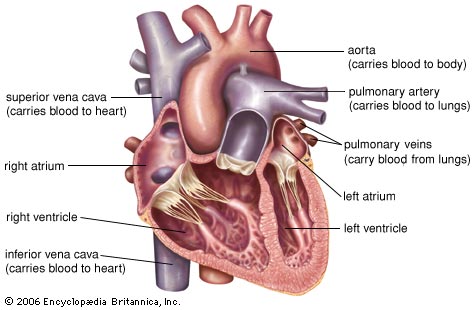
Living in a culture that is so suffocatingly secular, we are programmed to think that life explains itself. Whether we think of evolution or Darwinism, or not, the tendency for most people is not to see God in everything, as we should, but to see things in and of themselves, as if they got there by some “natural” process. Although it’s completely insane and illogical, people too easily accept that life just created itself. I know, it’s ridiculous. Yet our cultural elites, our supposed intellectual betters, expect us to believe that some king of random, unguided, material process can explain everything. In fact, it explains absolutely nothing! I’ve been slowly reading through a series of 81 articles at Evolution News about “The Designed Body,” and reading it makes it impossible for one to be an atheist. And when I use the word impossible, I mean impossible! I challenge anyone to read how heart valves work, and then tell me with a straight face that “random, unguided, material processes” could account for it: (more…)
Jul 18, 2020 | Explanatory Power
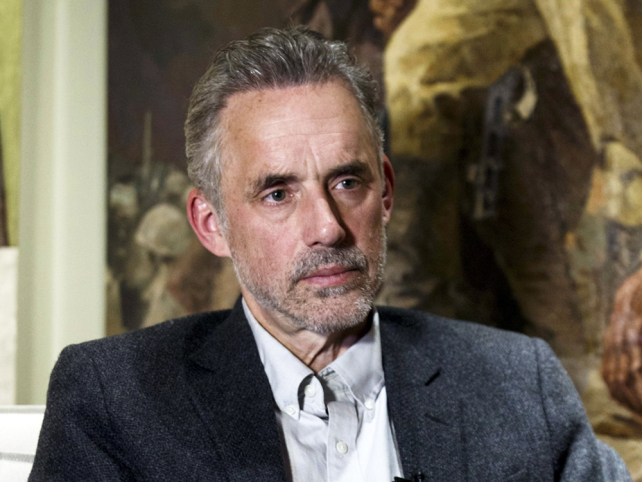
So far, anyway. That most important thing would be Jesus Christ as his Lord and Savior, but he hasn’t been able to make what to him is probably a leap. That’s a shame, for obviously possible eternal reasons, but also because his worldview is so infused with Jewish-Christian notions about the nature of man and sin, and the inherent struggle that is life. I’m slowly reading through his 12 Rules for Life with one of my sons, and this paragraph (p. 93) blew me away:
We are always and simultaneously at point “a” (which is less desirable than it could be), moving towards point “b” (which we deem better, in accordance with our explicit and implicit values). We always encounter the world in a state of insufficiency and seek its correction. We can imagine new ways that things could be set right, and improve, even if we have everything we thought we needed. Even when satisfied, temporarily, we remain curious. We live within a framework that defines the present as eternally lacking and the future as eternally better. If we did not see things this way, we would not act at all. We wouldn’t even be able to see, because to see we must focus, and to focus we must pick one thing above all else on which to focus.
(more…)
Jul 14, 2020 | Notable Quotations
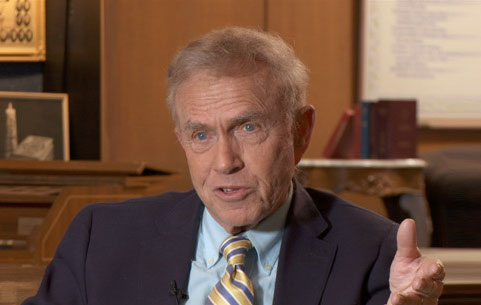
Of all religious beliefs in the world, past or present, none have more thoroughly based themselves on history than Judaism and Christianity. The divine-human encounter in the biblical faiths always involves claims about real people, living in real places, who acted in real events of the past, many of which are also cited in secular ancient history. Both testaments of the Bible use the past tense of narrative prose—more than any other form of language.
Because Judeao-Christianity has so thoroughly influenced Western culture, we are prone to imagine that all other world religions have a similarly solid historical base. This is by no means the case. It can, in fact, be argued that every religious system before or since Judaism and Christianity has avoided any significant interaction with history, and instead has asked its followers to believe, by sheer faith alone, the claimed revelation of its founder(s). This is true of the mythologies of yesterday and the cults of today, the religions of the East or of the “New Age” of the West.
Or, whenever links with genuine history are claimed—as in several modern belief systems today—these are never verified by secular history or the findings of archaeology. Typically, a single founder claims divine revelation, which is subsequently written down as a holy book for his or her following. The founder may well have been historical, of course, but one looks in vain for true correlations with secular history in the founder’s holy book. Rather than any private, once-for-all-time revelation, Judeo-Christianity’s Scriptures encompass a two-thousand-year-plus period—two millennia in which its holy books constantly interlaced themselves with history.
—Paul L. Maier, In the Fullness of Time: A Historian Looks at Christmas, Easter, and the Early Church
Jul 12, 2020 | Apologetics, Parents and Family
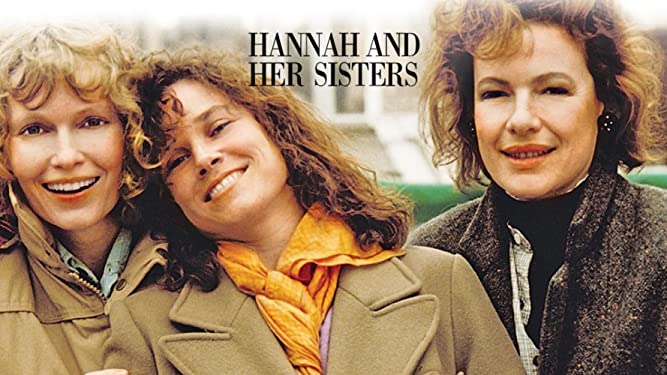
Well, probably teenager kids. It’s Woody Allen, after all. My wife and I recently re-watched Hannah and Her Sisters with our two sons (our daughter wasn’t available; she’s married), and it was an incredibly wonderful apologetics moment. I’ve argued that a secular culture that is often seen by Christians as a threat to their children is in fact their best friend, if we know how to use it. Woody Allen is always a great opportunity to do that. He is one of the few movie makers in Hollywood (although New York through and through) who deals with the big questions of life head on, and this movie is a wonderful example of that. Allen’s worldview is as secular as secular gets, and his movies are an excellent way to teach your children, or anybody else, the shallow, vacuous nature of such a life. It promises fulfillment, meaning, purpose, and hope, but never delivers. His movies always end in resignation to one degree or another. Since he can’t bring himself to believe in God, and in this movie he tries really hard (and it’s hilarious), whatever this unfulfilling life offers, that’s the best you can get. So eat, drink, and be merry, and go to art shows, as best you can. (more…)

Jul 8, 2020 | Epistemology - Trust
If you read the title of this post and immediately thought I was talking about religious faith, I got ya! I don’t mean to be rude, but you’ve been programmed by our secular culture to think of “faith” purely as a religious phenomena that applies only to religious people. In fact, faith, a synonym for trust, is an inescapable reality of every day existence for finite human beings. You can’t live without it. I will shortly prove that, but why this is so important is because the enemies of religious faith, specifically Christian religious faith, distort the meaning of faith to demean our faith. This is not double talk. Many Christians have allowed this distortion to create unnecessary doubt about their faith. As I’ll argue, doubt is as necessary to a normal functioning human being as faith, two sides of the same coin. Which brings me to the virus. (more…)

Recent Comments