
Jan 22, 2020 | Culture
Most Americans have never heard of Jim Elliot, the young man who died as a missionary in the jungles of Ecuador on January 8, 1956. Many Evangelical Christians have, and as something of a hero for his sacrifice to take the faith to the Indians in the jungles of Ecuador. What he, and his four companions did, giving their lives to take Christ where he had not been preached, appears completely insane to the modern secularist. Since this life is all their is, and since we can’t really know that it isn’t, we need to do everything we can to avert all risk, and squeeze every last second out of it we can. As Christians, this secularist mentality ought to be anathema to us, but too often it isn’t. The all pervasive influence of the secular culture all too easily turns us into secularists, but it doesn’t have to. (more…)

Jan 18, 2020 | Epistemology - Trust
Is that title click bait or what! Most people in our secular age live life in epistemological quandaries. As I was praying one morning this week I told God I was so grateful I didn’t have to live that way. I think the phrase came to me because of a movie I was watching the other night with my wife and soon to be 18 year-old son on Netflix called Marriage Story (more like Unmarriage Story). It was apologetics fodder! Much like a Woody Allen movie, all puzzle pieces and no big picture into which any of the pieces fit. Thus the quandaries, as defined, a state of perplexity or uncertainty over what to do in a difficult situation. It’s so pathetic to watch people try to figure out life without God, and his revelation to us in creation, Scripture, and Christ. That’s the epistemological part, the ability to know or not, only comes through the revelation of God. (more…)

Jan 12, 2020 | Parents and Family
One of the easiest ways to persuade our children that God is real is the evidence of his incredible, amazing, mind-blowing design in nature. Paul tells us in Romans 1 that “God’s invisible qualities—his eternal power and divine nature—have been clearly seen, being understood from what has been made . . .” I made sure my kids understood this as they were growing up, and still do even though they are no longer kids. The reason it is critical for parents to do this is that we must counter the assumptions of the dominant secular culture. The most obvious, yet pernicious, is naturalism: the material world is all there is, and God is not required to explain it. Oh yes he is! Yet because of the ubiquity of secular culture, naturalism seems, well, natural. Countering this assumption (i.e., it can’t be proved) is easy. A simple example show’s how.
(more…)
Jan 10, 2020 | Notable Quotations
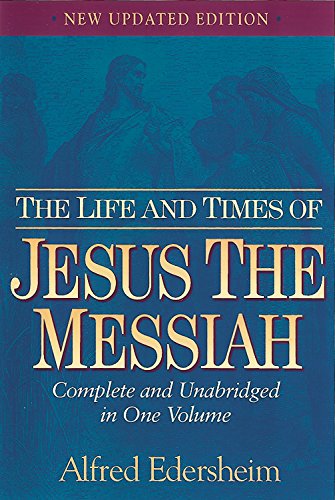
[H]ere another important lesson is implied in regard to the miraculous in the Gospels. The history shows how little spiritual value or efficacy they attach to miracles, and how essentially different in this respect their tendency is from all legendary stories. The lesson conveyed in this case, is, that we may expect, and even experience, miracles, without any real faith in the Christ; with belief, indeed, in his power, but without surrender to his rule. According to the Gospels, a man might either seek benefit from Christ, or else receive Christ through such benefit. In the one case, the benefit sought was the object, in the other the means; in the one, it was the goal, in the other, the road to it; in the one, it gave healing, in the other, brought salvation; in the one, it ultimately led away from, in the other, it led to Christ and to discipleship.
—Alfred Edersheim, The Life and Times of Jesus the Messiah
(more…)

Jan 4, 2020 | Apologetics
In a previous post I argued that it is much easier to believe in Christianity than the alternatives, and discussed three ways we can judge a religion or worldview’s claim to truth. I argued that absolute certainty is impossible, so our goal should be beyond-a-reasonable-doubt certainty. The three ways (apologetics methods) bring us well beyond reasonable doubt for Christianity, and help us to compare it to the alternatives. Here are some examples of how these methods help us do that. (more…)

Recent Comments