
Jan 16, 2018 | Theology

In my previous two posts (one and two) I argued that how we understand our origins, where we come from and why we are here, have implications for life that are all encompassing. If we, as Scripture declares, are creatures made in God’s image in God’s world, then we can know what “real reality” is, and live accordingly. The results will be positive because we can live according to the actual nature of things. If, on the other hand, all we are is lucky dirt that erupted for no reason at all with no cause but chance, a grand cosmic coincidence if you will, then the implications will be bad, very bad.
Things, of course, are generally never absolutely one way or the other, perfect good or perfect evil, because in fact, as is evident all around us, we live in a fallen world that was created by a God good. So we see evidence of fallenness and goodness in everything. But the logical implications of origins will eventually drive people one way or the other. This is very important and should not be missed: a person’s, or people’s, or country’s, or culture’s basic presuppositions about the world we inhabit and what human beings are, will eventually find its way into the culture.
(more…)

Jan 12, 2018 | Theology

In my previous post I argued that how we see our origins, where we and this universe comes from, have significant implications for how we see reality and live life, all-encompassing implications, both positive and negative. The reason this is important for keeping our kids Christians, as I said, is that our goal as Christian parents is to sell our kids on “real reality,” on existence as it really is, or in other words, as God created it to be. The lucky dirt people, as I called them, are those who see our origins in material chance, atoms that came together for no reason at all to “create” all that we see and experience. It is extremely easy, and I mean ridiculously easy, to persuade our kids that such a view of reality is totally absurd, because it is!
The consequences of the lucky dirt view are all negative, and I’ll focus on that more in the next post, but here I want to briefly focus on the positive effects of understanding the biblical view of our origins. I’ll do that with a story that highlights a concept called telos. It comes from ex-communist Whittaker Chambers, and his magisterial autobiography Witness: (more…)

Jan 6, 2018 | Theology

In the beginning God created . . . We know this famous passage from Genesis 1, the first words of our Bible. What we often fail to appreciate, unfortunately, is how profound these words are in their implications for all of human existence. How human beings understand the origin of their existence has everything to do with how they understand that existence, and how they attempt to live it. Everything. If, on the one hand, we believe that all we are is lucky dirt as a result of an astounding cosmic accident, that will have certain implications. It is easy to prove both logically and practically none of these are good. By contrast, if we are created by an almighty personal God in his image, the implications of the logic flow in an inescapably positive and constructive direction.
Why would this be significant for keeping our kids Christian? Simply put, we have to sell “real reality” to our children. I cannot adequately convey how crucial this is as an apologetic for our children. The world works a certain way because that is the way God made it to work. If our origins, where we came from, are in the mind and will and power of God, then the reality we inhabit will in every sense reflect this God, the God we learn about in the Bible.
(more…)
Jan 3, 2018 | Theology

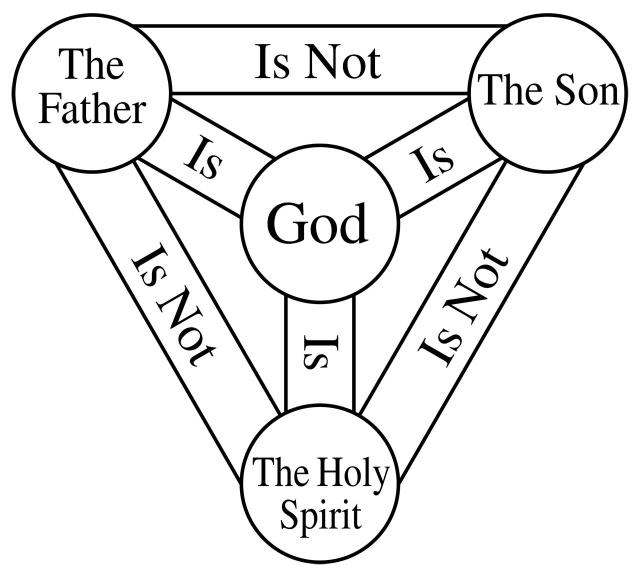
There are many things that separate Christianity from every other religion on earth, but nothing is more central than the Trinity. An important part of apologetics, and keeping our kids Christian, is to make the case that the Trinity is all over the Bible, from Genesis to Revelation. For several hundred years of her beginning, the Church struggled with how to make sense of Scripture, that there is one God, but that Jesus also clearly claimed the mantel of divinity. While critics of Christianity claimed that the concept of a Triune God is illogical and absurd, they refused to wrestle with the texts of Scripture that have Triune implications. I learned of one in a recent Advent sermon at our church.
(more…)
Dec 29, 2017 | Theology

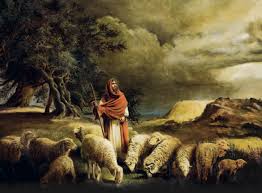
Reformed theology has been instrumental, even foundational, in keeping our kids Christian. Looking back at Christian history this means that I find the faith explicated by men such as Augustine and Calvin more persuasive than Pelagius and Arminius. I was reminded of this recently in a New Testament reading at our church from John 10. The passage is familiar to all Christians because it’s about Jesus as the good shepherd. What stood out to me was the relationship of the shepherd to the sheep. It is clear that the relationship is one of belonging; the good shepherd knows his sheep, and they know him. They belong to him, and he to them. Here are Jesus’ words:
11 “I am the good shepherd. The good shepherd lays down his life for the sheep. 12 The hired hand is not the shepherd and does not own the sheep. So when he sees the wolf coming, he abandons the sheep and runs away. Then the wolf attacks the flock and scatters it. 13 The man runs away because he is a hired hand and cares nothing for the sheep.
14 “I am the good shepherd; I know my sheep and my sheep know me—15 just as the Father knows me and I know the Father—and I lay down my life for the sheep.
27 My sheep listen to my voice; I know them, and they follow me. 28 I give them eternal life, and they shall never perish;no one will snatch them out of my hand.
(more…)



Recent Comments