Jan 9, 2017 | Apologetics

In my previous two posts I wrote about how death in a movie contributes to a secular plausibility structure, and how death lends more credibility to Christianity than atheism/materialism. In this post I want to explain what death is from a Christian perspective, and where it came from.
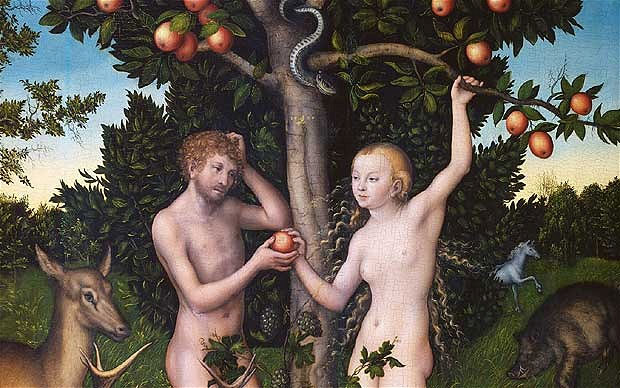
According to Christianity, death is an aberration. It’s not the way things were supposed to be, and all human beings know this regardless of their beliefs. In Genesis 1 we read that God created the world very good, and Adam and Eve had the run of the place, it was all theirs. Except, that is, one tree. Would Adam (Eve wasn’t around yet) trust and obey his Creator:
15 The Lord God took the man and put him in the Garden of Eden to work it and take care of it. 16 And the Lord God commanded the man, “You are free to eat from any tree in the garden; 17 but you must not eat from the tree of the knowledge of good and evil, for when you eat from it you will certainly die.”
(more…)
Jan 7, 2017 | Truth
“Comrade, your statement is factually incorrect.”
“Yes, it is. But it is politically correct.”
The notion of political correctness came into use among Communists in the 1930s as a semi-humorous reminder that the Party’s interest is to be treated as a reality that ranks above reality itself. Because all progressives, Communists included, claim to be about creating new human realities, they are perpetually at war against nature’s laws and limits. But since reality does not yield, progressives end up pretending that they themselves embody those new realities. Hence, any progressive movement’s nominal goal eventually ends up being subordinated to the urgent, all-important question of the movement’s own power. Because that power is insecure as long as others are able to question the truth of what the progressives say about themselves and the world, progressive movements end up struggling not so much to create the promised new realities as to force people to speak and act as if these were real: as if what is correct politically—i.e., what thoughts serve the party’s interest—were correct factually.
—Angelo M. Codevilla, “The Rise of Political Correctness”
Jan 6, 2017 | Explanatory Power

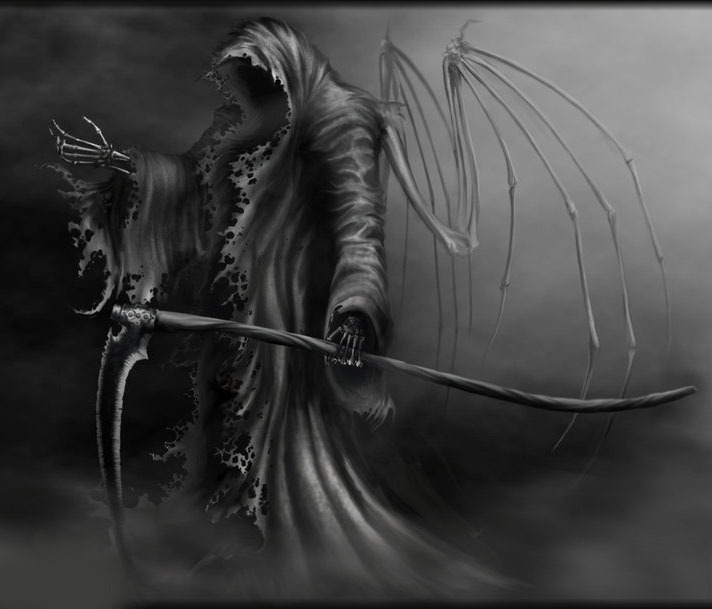
In my last post on the nature of plausibility structures, I used a movie with death as a central character to show how subtle messaging in movies leads to making God seem more or less real to people, thus more or less plausible. As I said, death never caused one of the other characters to ever bring up God, as if the divine being is irrelevant to life and death. I want to make the case briefly that although death and suffering often cause people to reject God, they are a far bigger problem for the materialist/atheist than the Christian. My contention is that death and suffering lends credibility to the Christian faith, while making atheism/materialism less credible.
(more…)
Jan 4, 2017 | Plausibility

Plausibility is a word we don’t often hear in church (ever?), but the concept plays a crucial role in helping us keep our kids Christian. A familiar word, it is defined thus: having an appearance of truth or reason; seemingly worthy of approval or acceptance; credible; believable. One of the basic premises of my book is that most people reject the Christian faith, or drift away from it, not because they’ve studied all the evidence, worked through the logic of it, and come to a conclusion, but because it doesn’t seem real to them. It is not plausible to them. If we add structure to the word, we get a building, a structure, of belief in our minds such that certain things seem real and credible to us, and others don’t. The culture we inhabit contributes to that conceptual edifice.
(more…)

Jan 2, 2017 | Explanatory Power
 In her fiction, O’Connor deliberately tried to alter her readers’ perception, to get them to notice what she called the “distortions” of modern life and to look at the created world closely enough that they might perceive in its depths proof of a creator. For secular audiences, she saw little point in subtlety, famously explaining her grotesque style in this way: “To the hard of hearing you shout, and for the almost blind you draw large and startling figures.”
—Cassandra Nelson, “Seeing Is Believing: What Flannery O’Connor Meant by ‘Vision'”



Recent Comments