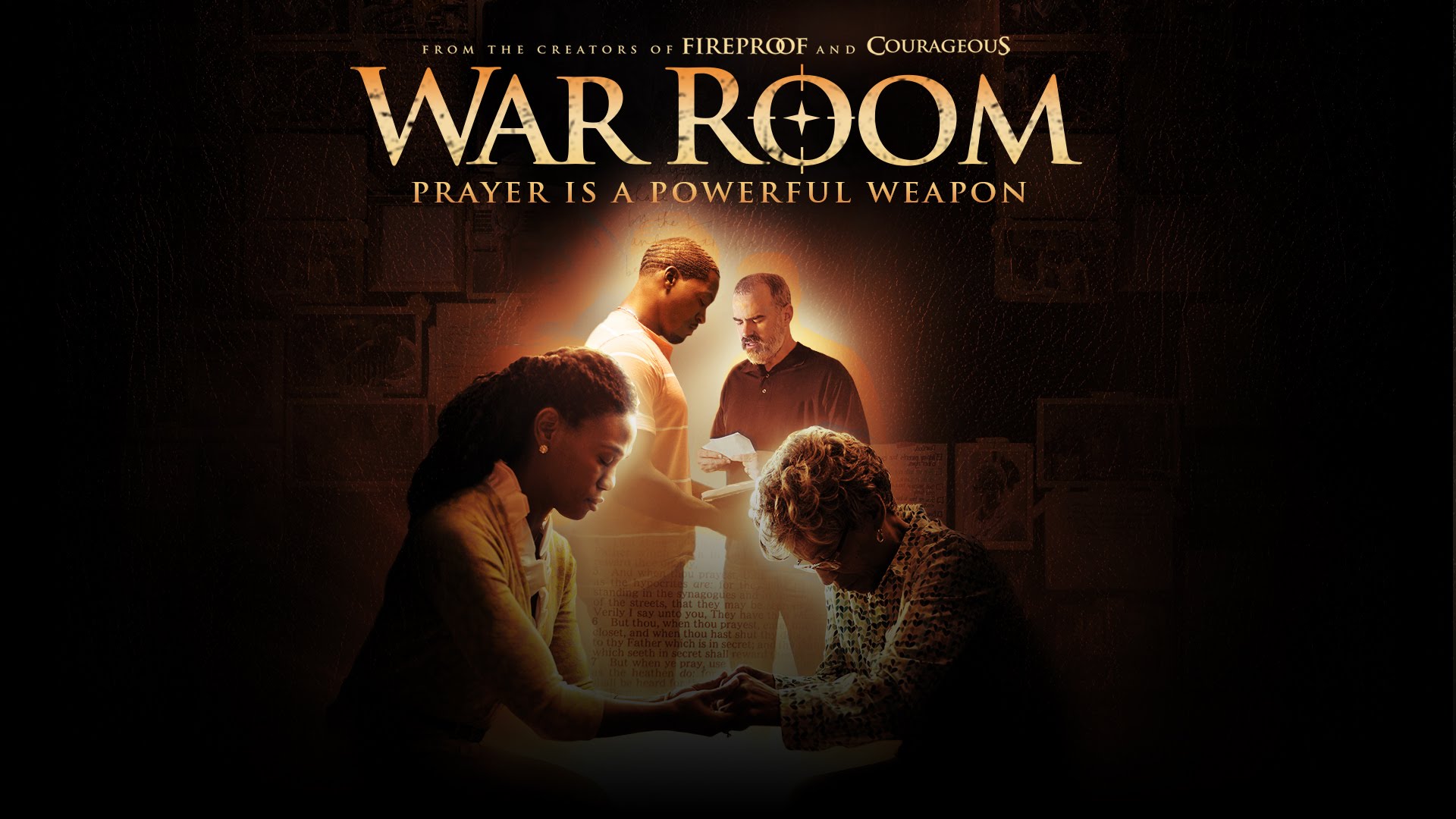
With hit “faith-based” movies like War Roomand Captive, there was much discussion about Christians and film making. Interestingly enough, some of the harshest critics of these movies are from Christians themselves who seem embarrassed by what I call the cheese factor in many such movies.
A good example can be found at The Federalist by Christopher Hutton. The title of the piece: “‘War Room’ Is Just As Cheesy As All Kendrick Brothers Films.” There is no doubt that many of these movies, not just those by the Kendrick brothers, have a generous helping of cheese, but such criticisms are in many ways myopic. They are especially so in light of the history of evangelical Christianity in America. I’m actually encouraged, as a Christian, that these movies are being made at all, cheese notwithstanding.
Since Father Time took the great David Bowie, I have read numerous speculations about what might have been the state of his soul. Bowie, the consummate showman and actor, was a very private man, refreshing in the age of instant everything. So there isn’t a lot to go on, and I am never one to speculate on such things, leaving that to a power infinitely higher than I. But a friend sent me an encouraging piece that doesn’t bother with speculation: “Why David Bowie Knelt and Said the Lord’s Prayer at Wembley Stadium.” Yeah, I didn’t know that either. The title on the video of him kneeling in prayer: “The Bravest Moment in Rock & Roll History.” Given that sex and drugs are two words most often associated with rock ‘n roll, such a prayer before a hundred thousand rock fans could most definitely be called brave.
As I read this piece and then looked at the video of him kneeling before the crowd saying the Lord’s Prayer, I started to see another video for the song “Lazarus” from his final album, Blackstar, in a different light. (The name of the song kind of gives it away if you’re familiar with the biblical story of Jesus raising his friend Lazarus from the dead.) Bowie had to be a fan of C.S. Lewis to use a wardrobe so prominently. If you look carefully at the beginning of the song you’ll see a young man open the wardrobe and stare at Bowie laying on what looks like a hospital bed. He starts with the words, “Look up here, I’m in heaven.” The young man appears to become older as the video goes on; maybe an alter ego? Bowie writes in a journal as he struggles with what could be his last thoughts. You’ll notice a skull on the desk as he writes, a la MacBeth? To be or not to be? Ah mortality, the great equalizer, the great question mark over human existence. Leave it to Bowie to ask the most profound of questions as he exits this mortal coil. In the last scene we see Bowie backing into the wardrobe from which the young man came, and shutting the door. Godspeed in Narnia, David Bowie. Thank you for the joy you brought untold millions over so many years.
I read James Davison Hunter’s “To Change The World” several years ago and thought it was a brilliant analysis of the power of cultural institutions to shape the culture. His strategy for cultural engagement, though, left me puzzled at the time. He called it “faithful presence,” and there didn’t seem to be any sense that he believes Christians should want to influence the culture. This question of Christians and their relationship to culture is a complicated one, as H. Richard Niebuhr described in his seminal book on the subject, Christ and Culture. I think I understand “faithful presence” better now, but what is the take away of a discussion of culture for Christian parents?
We cannot take for granted or be unaware of the culture’s influence on our kids. It is more than obvious that we live in a post-Christian culture hostile to our faith. Some parents fear this hostility, or try to protect their children from it. I have a different take: culture can be our children’s best friend, if we know how to use it. We call using culture to defend and affirm the faith cultural apologetics, and it gets an entire chapter in the book; it is that important. Culture is ubiquitous, so every day we practically we have a myriad of opportunities to strengthen our kids faith as we interact with the culture.
Christian parents will want to read Hunter’s book to get an understanding of where true cultural influence comes from, and why the assault on Christianity has such power in our day. The Gospel Coalition has just published a eBook that takes a look at Hunter’s work five years later:
In 2010, noted University of Virginia sociologist James Davison Hunter published the landmark book To Change the World: The Irony, Tragedy, and Possibility of Christianity in the Late Modern World. On the five-year anniversary of its publication, we asked eight contributors to engage the book’s thesis and assess its effect on the ongoing interaction of evangelical Christians with the surrounding culture. The result is The Gospel Coalition’s first eBook, Revisiting ‘Faithful Presence’:To Change the World Five Years Later. You can download the book, for free, to read in your preferred format.
You can find an introduction to the book at The Gospel Coalition’s website, and and links to download it in various formats.
I recently wrote a post at The American Culture about how the hot fall TV trend is interracial lesbian relationships. I argued that Hollywood has long had an agenda to normalize homosexual behavior, and because of that many Americans vastly overestimate the gay and lesbian population. One commenter, Edmond D. Smith, was kind enough to say that because I had the temerity to say such things that I am “obviously racist, sexist and homophobic.” You gotta love that: three for the price of one! In the fevered totalitarian leftist secularist progressive mind if you speak unpopular truths, to them, you are unmitigated evil. But speak we must.
As I wrote in that previous post, last year the CDC did an extensive study and found that self-professed homosexuals make up 1.6 percent of the American population. Yet because of popular culture, and specifically the number of gay and lesbian story lines coming out of Hollywood, most Americans would be shocked at this number. I got startling confirmation of this distorted perception from my own family not long ago. I don’t know why I was so surprised. (more…)
Colson’s public-square work offers modern evangelicals a workable model. Initially, Colson considered himself contra mundum, “against the world,” as a believer. He wished to stand against evil. He never lost this vital perspective, but his friend, First Things editor Richard John Neuhaus, suggested Colson tweak the self-descriptor. The Christian, he said, is contra mundum pro mundo, “against the world for the world,” an elegant and accurate summation of evangelical engagement with a fallen order. The believer, and particularly the public-square witness, opposes evil, but does so not to defeat opponents or gobble up cultural territory. We are against the world out of love, seeking always to win lost friends to Christ and usher them into flourishing.
The gay “marriage” ruling, the gift that keeps on giving. As one headline read: “‘Sister Wives’ family points to same-sex marriage cases in arguing against Utah polygamy ban.” Of course they would, and they would be perfectly logical to do so. In fact, the Obergefell v. Hodges ruling pretty much redefined marriage out of existence. Remember, when Justice Kennedy in the 1992 case that legalized sodomy said, “At the heart of liberty is the right to define one’s own concept of existence, of meaning, of the universe, and of the mystery of human life.” This sounds like more at the heart of what Christians call the fall that we read about in Genesis 3. Satan’s temptation to Adam and Eve was that what God provided wasn’t good enough. If only they would listen to him they would “be like God, knowing good and evil,” the perfect equal to Justice Kennedy’s hubris. (more…)



Recent Comments