Apr 28, 2019 | Epistemology - Trust
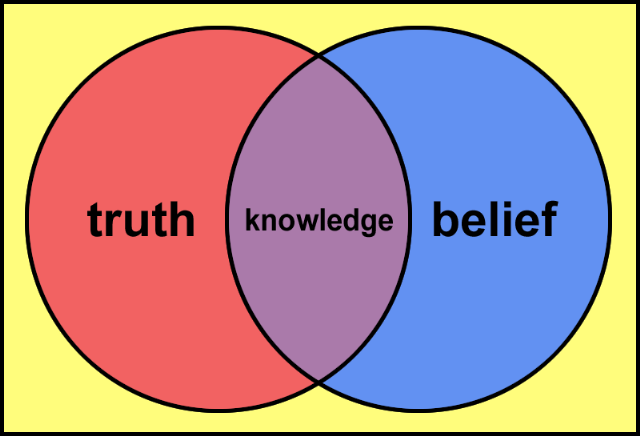
I recently heard New Testament scholar Daniel B. Wallace on a podcast say that we need to understand the difference between the search for truth and the search for certainty. Most Americans, and westerners in general, think that because you can’t have the latter, the former is impossible as well. That’s one side of the divide where the agnostics and skeptics congregate, and for whom any debate about ultimate meaning is a fruitless waste of time. On the other are those who believe absolute certainty is achievable, and act like they’ve found it. Arrogant, absolutist atheists are the most obvious offenders of this mindset, but Christians aren’t immune from it either. There are certain kinds of fundamentalist Christians (Protestant or Catholic) who think absolute certainty is a requirement for and evidence of genuine Christian faith. You’ll see shortly what this is tragically mistaken.
(more…)

Mar 31, 2019 | Epistemology - Trust
Some years ago I had an Instant Message conversation with a co-worker of mine. It had something to do with religion, and I’ll never forget a phrase she used: “For me, I’ll stick with science.” It was not the forum to challenge such a hollow contention, but it was indicative how many Americans and Westerners think. When we reflect on epistemology, which few people do (unfortunately most Christians as well), the question is how and if we can actually know things. Or in other words, can we have confidence that the things we know are in fact true. In the 21st century secular West the default position is that science is the only reliable way we can know things (scientism). Everything else is guess work or preference, or “true for you, but not for me.” Science can indeed give us wonderful and helpful knowledge, but it is dubious thing upon which to place our trust for true knowledge, and an extremely thin reed upon which to stake all our knowing.
(more…)
Jan 27, 2019 | Apologetics, Epistemology - Trust
A favorite tactic of skeptics to justify their rejection of God is to take some example of what God has ostensibly done or does, and assert that if there was a God he certainly wouldn’t have done it this way or that. The silliest direct example of this in my life happened before the Internet, in a letter writing exchange with a university professor I didn’t know. He claimed that if there was such a being as God that he would never make other beings who, how do I put this politely, need to defecate to rid the body of waste. That, to him, was a deal breaker: God cannot exist! I was incredulous. Seriously? You can’t come up with anything better?
(more…)

Dec 22, 2018 | Epistemology - Trust
Until recently, I had never thought of revelation as a gift. God’s revealing himself and the truth about the nature of reality just was what it was, revelation. I can’t remember now where I’d read this phrase, but it struck me as profound. Humanity without revelation, without something beyond human experience and knowledge, is in every sense benighted. That is, we are “in a state of pitiful or contemptible intellectual or moral ignorance.” In other words, we don’t have a clue! Most Christians, unfortunately, don’t act as if God’s revelation to us is a gift. Our tendency, all of us, is to take it for granted. (more…)

Dec 5, 2018 | Epistemology - Trust
The history of philosophy is a fascinating study, and one Christians need to be familiar with. Most Christians, however, think that philosophy is for “intellectuals,” and not something they would be interested in or could understand. Yes, much philosophy is esoteric and difficult to understand, but the basic ideas really are’t. This is important because history reveals what ideas have given us the world we inhabit, and it’s culture, in the 21st century. In other words, in the title of an influential book by Richard Weaver written in 1948, Ideas Have Consequences. To take the title one step further, and as I’ve heard numerous times from the folks at Breakpoint and the Colson Center, “Ideas have consequences, and bad ideas have victims.” Many of the consequences of the ideas bequeathed to us from Western thinkers have been good, but the bad ones have been really, really bad. In fact, we live with the consequences of both every day. The bloody 20th century, with north of 100 million people killed, was a result of very bad ideas. (more…)

Apr 14, 2018 | Epistemology - Trust, Explanatory Power
According to the current secularist worldview the only sure epistemological foundation (basis for knowing) is science. At some point in the last hundred or so years through popular culture, education, and media, science replaced religion in the modern imagination as the governing authority of how we’re to run our lives. But something unexpected has happened on the way to the coronation of King Science.
It has long been been assumed by secular, educated Western cultural elites that growing scientific knowledge would one day make religion superfluous. Science would supposedly tell us everything we need to know, and once we knew everything God would no longer be necessary to explain what can’t be explained. Scientific knowledge, however, is increasingly leading us in just the opposite direction. On both the micro and macro level, from the tiniest nano particle, to the existence of the universe itself, the amazing explosion of scientific knowledge is leading to very uncomfortable, for the secularist, metaphysical questions.
(more…)

Recent Comments