Those words from James chapter 4 are a sobering reminder of a fact of existence we all too easily ignore. Yet most people live as if this life was eternal life, as if death will not eventually find them. Everything they focus on is this life as if the next life isn’t coming, soon. Ignoring the next one never made sense to me because we’re going to be dead a whole lot longer than we’re alive, and if there is life after death I want to know about it. If there is, in an understatement for all time, that changes everything. Every. Single. Thing. One of the most important things we can teach our children is the truth of James’ words. In fact, practicing what I preach, we just learned last night that our daughter is pregnant with our first grandchild (yipee!!!). Being the morbid realist I am, I said to her, you know, as soon as that little creature was conceived, it was condemned to death. Well, thanks, Dad! My daughter knows that’s par for the parenting course she got from me. We can never be reminded of that too much, and she knows that too. (more…)
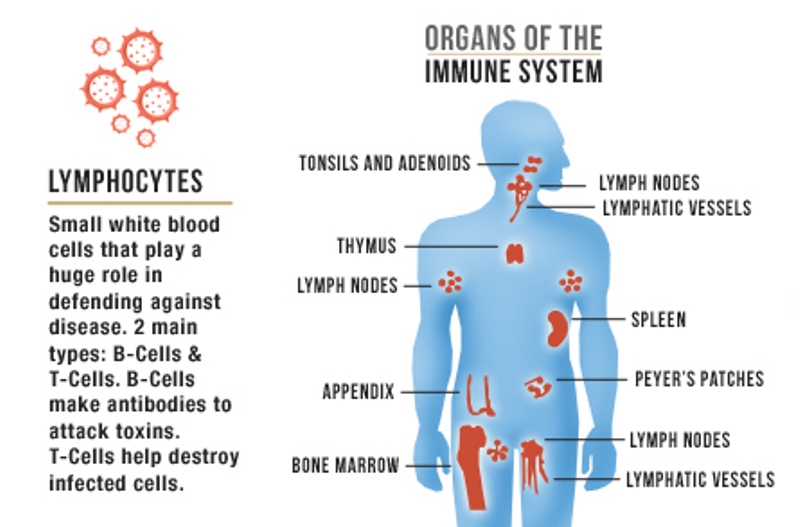
Well, that wasn’t so hard now, was it. This thought came to me as I was reading an article yesterday about “How the body builds a healthy relationship with ‘good’ gut bacteria.” There is only one explanation, only one, for the preposterous complexity of the human body’s immune system (not to mentioned everything else), and that would be our almighty Creator God! The Apostle Paul tells us “the secret” to seeing God in everything: “God’s invisible qualities—his eternal power and divine nature—have been clearly seen, being understood from what has been made, so they are without excuse.” So, when we open our eyes in the morning we should see . . . . God! He is invisible, but everything that exists has been made by him and reflects him, including our eyes, brains, nervous systems, and every cell in our bodies that allows us to see and perceive him through all that he has made. So when I read the first few paragraphs of the article, guess who I thought of? Give up? (more…)
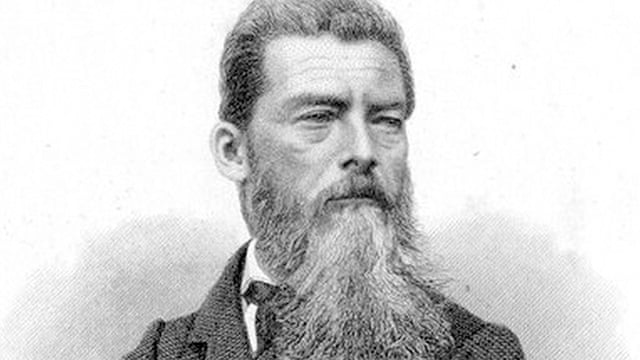
If you’re not familiar with Ludwig Feuerbach (1804-1872), he was a significantly influential atheist philosopher, primarily because he influenced two of the great malevolent thinkers of the modern age, Marx and Freud. The misery left in the wake of their influence on the 20th century is awesome to behold in its sheer destruction. For Marx that manifested itself in the slaughter of more than a hundred million human beings, and for Freud, the psychological and emotional destruction of generations. We can add to that that many took him as an inspiration for the so called sexual revolution, and we know that hasn’t turned out so well. All three men were committed believers in a God-less universe, but it was Feuerbach who laid the foundation with his assertion that all religion was merely human wish fulfillment. His arguments were definitely not that simplistic, but he believed since there was no God, the prevalence of religion in all cultures and all times had to be explained in some way, and human psychology was it. (more…)
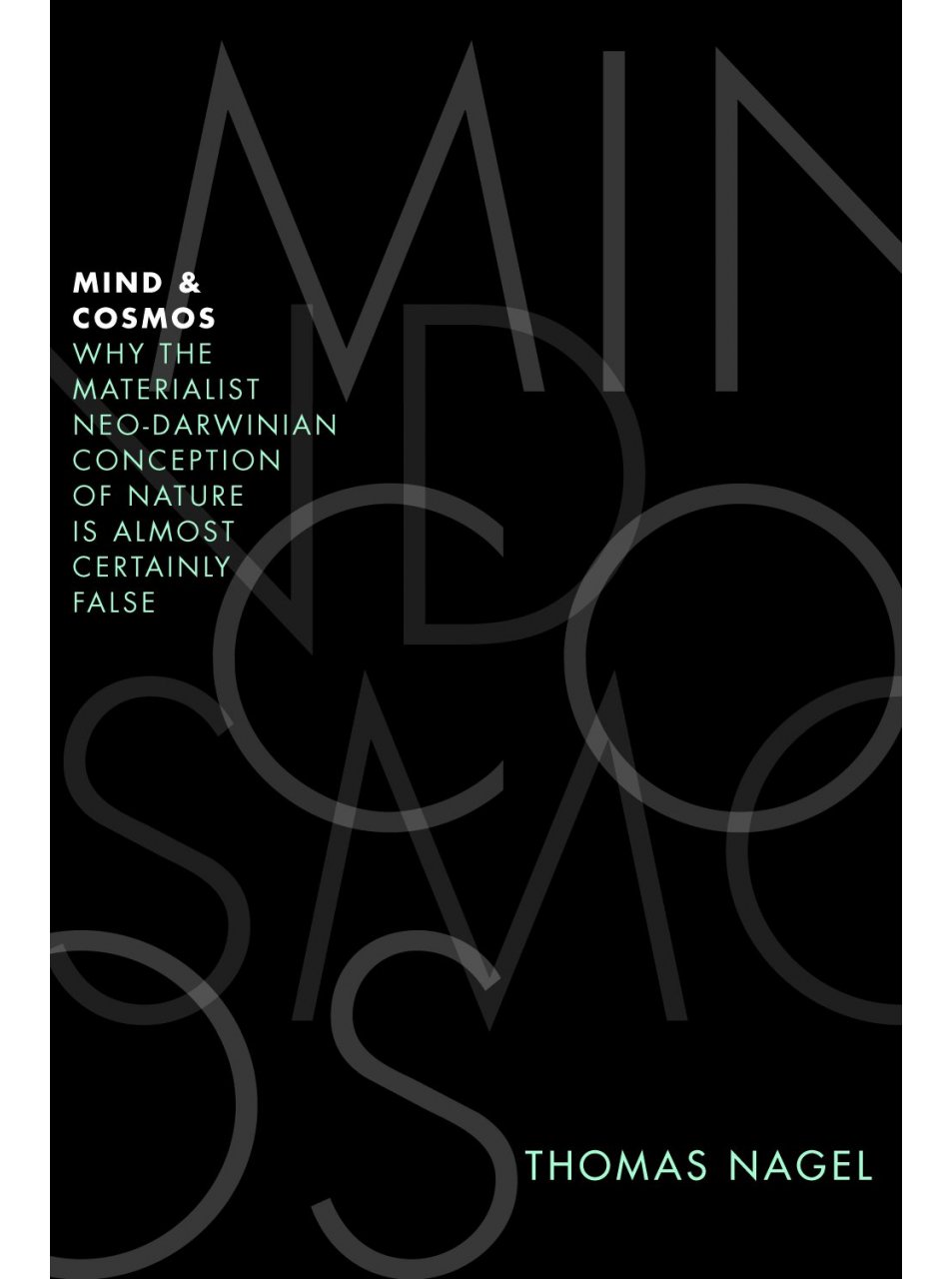
I just finished a book by British Philosopher, and atheist, Thomas Nagel called Mind & Cosmos. The reason I read it was because of the subtitle: Why the Materialist Neo-Darwinian Conception of Nature Is Almost Certainly False. It’s a short but very dense read by a philosopher of very big mind, much bigger than mine. I had to read some passages over several times to try to figure out what he was saying, and even then I couldn’t figure it out. I did understand enough to realize that it was a colossal enterprise of spitting into the wind, of trying to hold on to a worldview that he knows has zero explanatory power. As the blurb for the book puts it, Nagel “argues that the widely accepted world view of materialist naturalism is untenable.” Right, but he’s obviously determined to not give up his materialist naturalism; the futility of the enterprise is pathetic. I don’t mean that as a put down, but that it’s sad to see such a brilliant man work so hard to deny the obvious.
Over and over again he points to the only logical conclusion of his musings, but he can’t allow the conclusion to be God. Here are a few quotes to make the point:
The existence of conscious minds and their access to the evident truths of ethics and mathematics are among the data that a theory of the world has yet to explain.
Really? How about God! The eternal conscious mind who created all conscious minds? Nope, can’t go there. How about:
The respective inadequacies of materialism and theism as transcendent conceptions, and the impossibility of abandoning the search for a transcendent view of our place in the universe, lead to the hope for an expanded but still naturalistic understanding that avoids psychophysical reductionism.
What does that even mean! So, we can have some explanation of the universe that is at once transcendent and still naturalistic? Some explanation that transcends the materialist conception of the universe, matter is all that there is, but somehow transcends matter? This kind of nonsense is all over this little book. The man is desperate to hold on to his atheism in spite of a universe that makes his atheism absurd. One more:
I do not find theism any more credible than materialism as a comprehensive world view. My interest is in the territory between them. I believe that these two radically opposed conceptions of ultimate intelligibility cannot exhaust the possibilities.
Between? Really? Let me interpret this with a question. He realizes the bankruptcy of materialism, and believes that God certainly can’t exist, so there must be something in between? Like what? Something that transcends materialism that isn’t material but isn’t God? As “they” say, clutching at straws. I think what Paul said in Romans 1 is a much more satisfying answer to his dilemma: “Since the creation of the world God’s invisible qualities—his eternal power and divine nature—have been clearly seen, being understood from what has been made, so they are without excuse. ” As I said in my previous post, scientific knowledge is making the invisible qualities of God more visible than ever before, but as we can see with Mr. Nagel, it is only to those God has given eyes to see the obvious. If you refuse to see, you write books like Mind & Cosmos.
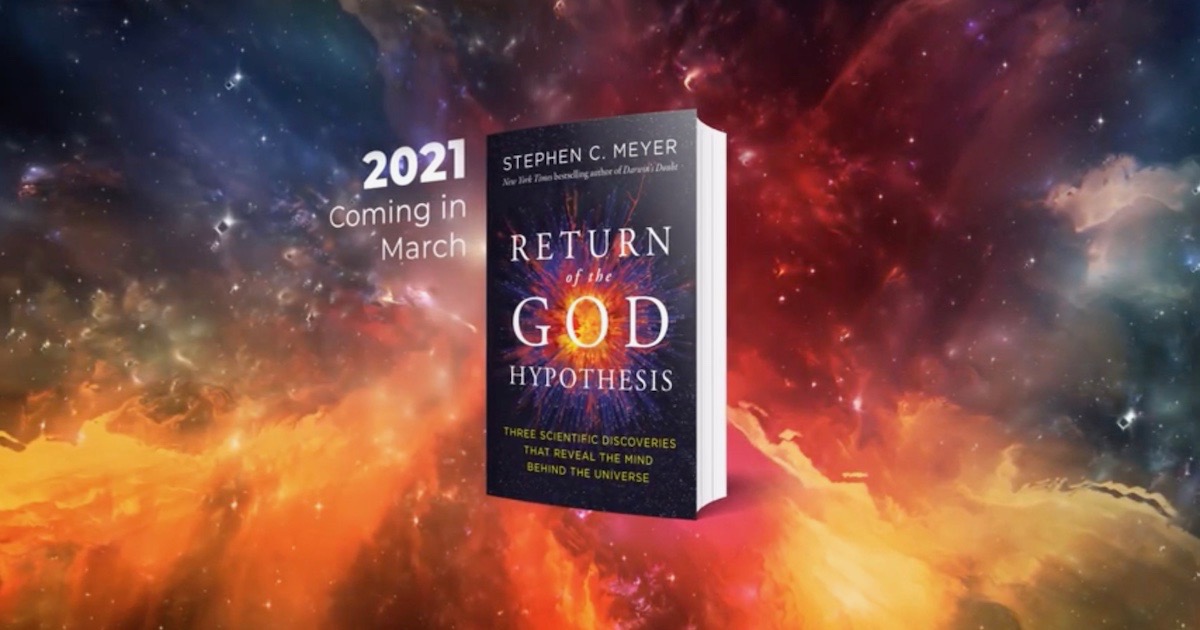
For the last couple hundred years in Western culture Christianity has been on the defensive. The 20th century saw the full flowering of militant and confident secularist materialism to the point where our cultural elites see Christianity not just as wrong and backward (especially “unscientific”), but morally evil. Known as the woke mob is not only dominant in education, Hollywood, and the media, but has now even taken over corporate boardrooms. The irony is that they refuse to follow their mantra to “follow the science” when that science leads directly to a Creator God. With the advance in scientific knowledge over the last 50 years it takes willful blindness, which rebellious sinners are really good at, to refuse to see the evidence that forces us to infer a designer from a universe so exquisitely designed for life. I recently watched/listened to the video below of Eric Metaxas having a discussion with Stephen C. Meyer about this new book, The Return of the God Hypothesis. I’m adding this to my ever growing list of books I want to read. He addresses three big discoveries that have happened over the last century that have put the materialists squarely on the defensive: (more…)
In a website comment section yesterday, someone linked to this short video for me to check out, so I did. It’s only a few minutes, but it’s very much worth watching because the guy is a gifted communicator and said some seemingly wise and thoughtful things, until you really think about what he’s saying. It sounds so profound on the surface, but it’s as solid as the surface of an egg shell. I wrote a comment in reply that I thought I’d share here because it is so necessary to confront the meaning of mortality, and entropy, and the second law of thermodynamics, all of which he talks about.
This is sad, even as it is beautifully elegant deeply unfulfilling garbage. The young man thinks this is some kind of answer to our mortality, but all it does is blind him to obvious questions: Why do we die? Why is there entropy? Why is everything ephemeral and fleeting and ultimately unfulfilling? For most secularists, including Freud, and all Eastern religions, the meaning of death is the elephant in the room best left ignored. Maybe death is ultimately meaningless, maybe it doesn’t point to anything beyond itself, doesn’t come from anywhere or have any reason for being. It is, as the atheist contends, just a brute fact of the natural world. Or maybe not. (more…)


Recent Comments