
Aug 29, 2018 | Explanatory Power
This phrase came to mind the other day as our family got word that my wife’s beloved stepmother, Dora Walston Haggard, had died unexpectedly. She had been going through some health challenges, but none that appeared remotely life-threatening. All of a sudden when death comes calling for those we love, the loss and separation is devastating. It’s difficult to comprehend that this person we knew so well, who was a presence in our lives, in a moment appears to be no more. But as Christians, we don’t believe they are no more. We trust that their souls continue to live, but in an altered state with God. As Jesus said to the thief being crucified next to him, “today you will be with me in paradise.” So are all those who die in Christ.

But my response to death’s reality and inevitability is to wonder if what we believe as Christians is actually true. Because I can’t “see” this reality beyond the grave I find it difficult to believe. It brings great anguish as I contemplate this person so loved by so many gone from us for what appears forever. But as I’m going through this anguish, the second part of the title’s sentence impinges itself upon me with even more strength; I find it even more difficult to not believe. I ask myself, What alternative belief makes death more palatable, or makes any more sense of death? Or life?
(more…)

Aug 17, 2018 | Explanatory Power
Death is an underrated tool in the apologists’s toolbox. Put another way, we can use death more often and more effectively to defend the veracity of the Christian faith. Christians are usually put on the defensive when the subject of death (and suffering) comes up because, well, I don’t know why. Ever since the so called Enlightenment when human beings began to believe they could sit in judgment on God, death (and suffering) became known as “the problem of evil.” Succinctly, the argument goes this way. If God is all powerful he should be able to keep evil from happening, but he obviously can’t, so he’s not. If he’s all good, he should not allow evil to happen, which he obviously hasn’t. So God is obviously not all powerful, nor all good, ergo he doesn’t exist. Or something like that.
The problem with this explaining away of God is that it leaves a far bigger problem in its wake: if there is no God, why, then, is there evil and suffering at all? The atheist’s answer: Uh, because. Now that’s intellectually satisfying, and emotionally fulfilling. NOT! And why is it bad? I guess because it’s not pleasant. But the only thing the God-less can say of evil and suffering (and death) is that it just is, deal with it. Brute fact, too bad, so sad. But getting rid of God only makes the problem of evil worse because, then, there is absolutely no reason at all for the misery all human beings experience. It is meaning-less.
(more…)

Aug 10, 2018 | Apologetics, Explanatory Power
Back in 1968 as the sexual revolution was raging, Pope Paul VI wrote a profoundly counter-cultural encyclical called Humanae Vitae. One of the things that made it so profound (and something completely missed by the Evangelical leaders of the day) was its appeal to natural law, or telos in nature. If you are not familiar with the word telos, in Greek it means purpose, and it was used as an important means of understanding the world for the ancient Greeks, especially Aristotle. Evolution News recently had a piece that connected the Pope’s arguments of telos in nature, and Intelligent Design (ID). The latter is a very simple, biblical, assertion that there is evidence of design in nature, and thus a designer. I know, shocking! I’ll explain why ID, and thus telos, is so “controversial” in a moment, but Paul tells us in Romans 1 that God, thus design, thus telos is obvious from his creation:
20 For since the creation of the world God’s invisible qualities—his eternal power and divine nature—have been clearly seen, being understood from what has been made, so that people are without excuse.
(more…)
Jun 1, 2018 | Explanatory Power
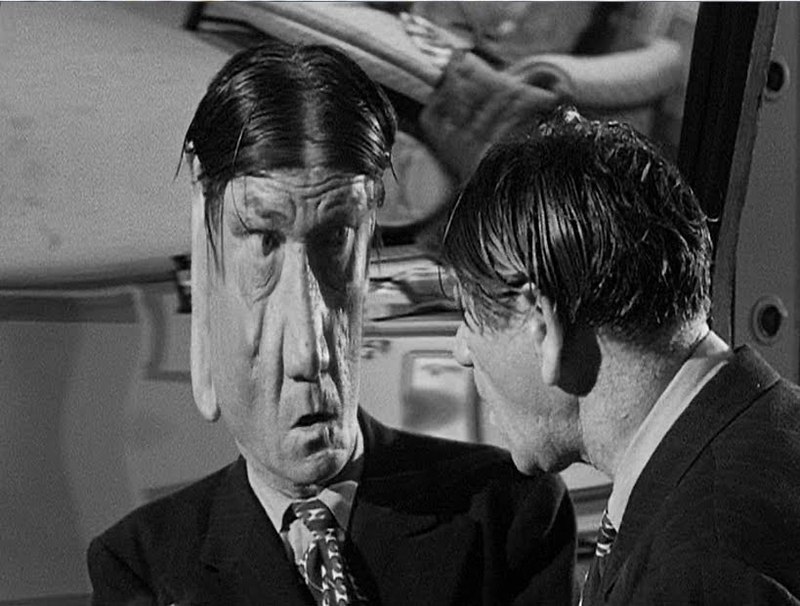
I recently finished The Picture of Dorian Gray by the famous 19th century provocateur Oscar Wilde. The book was itself a profound picture of a lost soul trying to come to terms with life devoid of a true north with which to make sense of it all. I read it with special fascination as a Christian whose fundamental assumption about reality is that we have no chance of figuring out the true meaning of life without divine revelation. Christianity is above all a revealed religion which asserts that without God revealing the truth of things to us, we will always be benighted. That is, we will be stuck to one degree or another in darkness and remain unenlightened.
As I’ve raised three children with much help, and balance, from my longsuffering wife, I’ve continually impressed upon them that the options of meaning in life are not Christianity and nothing, but Christianity and some other worldview, between Christianity and some other faith commitment, between one set of beliefs and another set of beliefs. The Triple A’s, as I’ve called them (atheists, agnostics, and the apathetic) are convinced (and deluded) that there are religious people out there who believe things, and have faith of some sort; then there are the Triple A’s. They think they are not religious, don’t believe things, and don’t require faith. In baseball we call that a strikeout!
(more…)

Apr 20, 2018 | Culture, Explanatory Power
In the soon to be blockbuster best-seller, The Persuasive Christian Parent, I tell the story of “the clicker.” Yes, that clicker, more commonly known as the remote control. As you’ll read in the book, the clicker is a great tool for engaging popular culture with our children, and teaching them the incredible explanatory power of the Christian worldview. An example comes from a movie we recently watched called Conspiracy. This gut wrenching film dramatizes a day long conference that took place on January 20, 1942, where Nazi officials discuss the “Final Solution of the Jewish question.” This solution was of course the attempt to murder all Jews in Germany, and it was hoped beyond. The cold, calculating demeanor of most of the participants as portrayed in the film is chilling. To figure out who would be included, they discussed blood percentages, parentage, and whether they were German citizens or not. The goal was complete extermination, and it was difficult at times to realize they were talking about human beings, not animals or something less. The clicker got a good workout.
(more…)

Apr 14, 2018 | Epistemology - Trust, Explanatory Power
According to the current secularist worldview the only sure epistemological foundation (basis for knowing) is science. At some point in the last hundred or so years through popular culture, education, and media, science replaced religion in the modern imagination as the governing authority of how we’re to run our lives. But something unexpected has happened on the way to the coronation of King Science.
It has long been been assumed by secular, educated Western cultural elites that growing scientific knowledge would one day make religion superfluous. Science would supposedly tell us everything we need to know, and once we knew everything God would no longer be necessary to explain what can’t be explained. Scientific knowledge, however, is increasingly leading us in just the opposite direction. On both the micro and macro level, from the tiniest nano particle, to the existence of the universe itself, the amazing explosion of scientific knowledge is leading to very uncomfortable, for the secularist, metaphysical questions.
(more…)

Recent Comments