
The Bible, and My Walk Through It
I’ve been a student of the Bible since the fall of 1978 when I first became a Christian.
Although I was born and raised a Catholic, and thus a Christian, I crossed the Tiber one evening that fall, although in the opposite direction of Caesar, when I was presented with the Protestant version of the gospel. Although our Catholic brothers and sisters would disagree, it was then that I became a Christian. I soon found out what separated Protestants from Catholics was something that came out of the Reformation, the five solas, the first of which is Sola Scriptura, or Scripture alone. The primary source of authority for Protestants is the Bible, whereas for Catholics it is the church. There are a variety of reasons for this, but when I started reading the Bible myself for the first time, I was like a dying man in the desert coming across a flowing spring of fresh water—I devoured it. Those first months and years of exposure to God’s word was electrifying to me. The amazing thing to me after more than 43 years of exposure to the Bible is that it’s just as electrifying to me today, only more so.
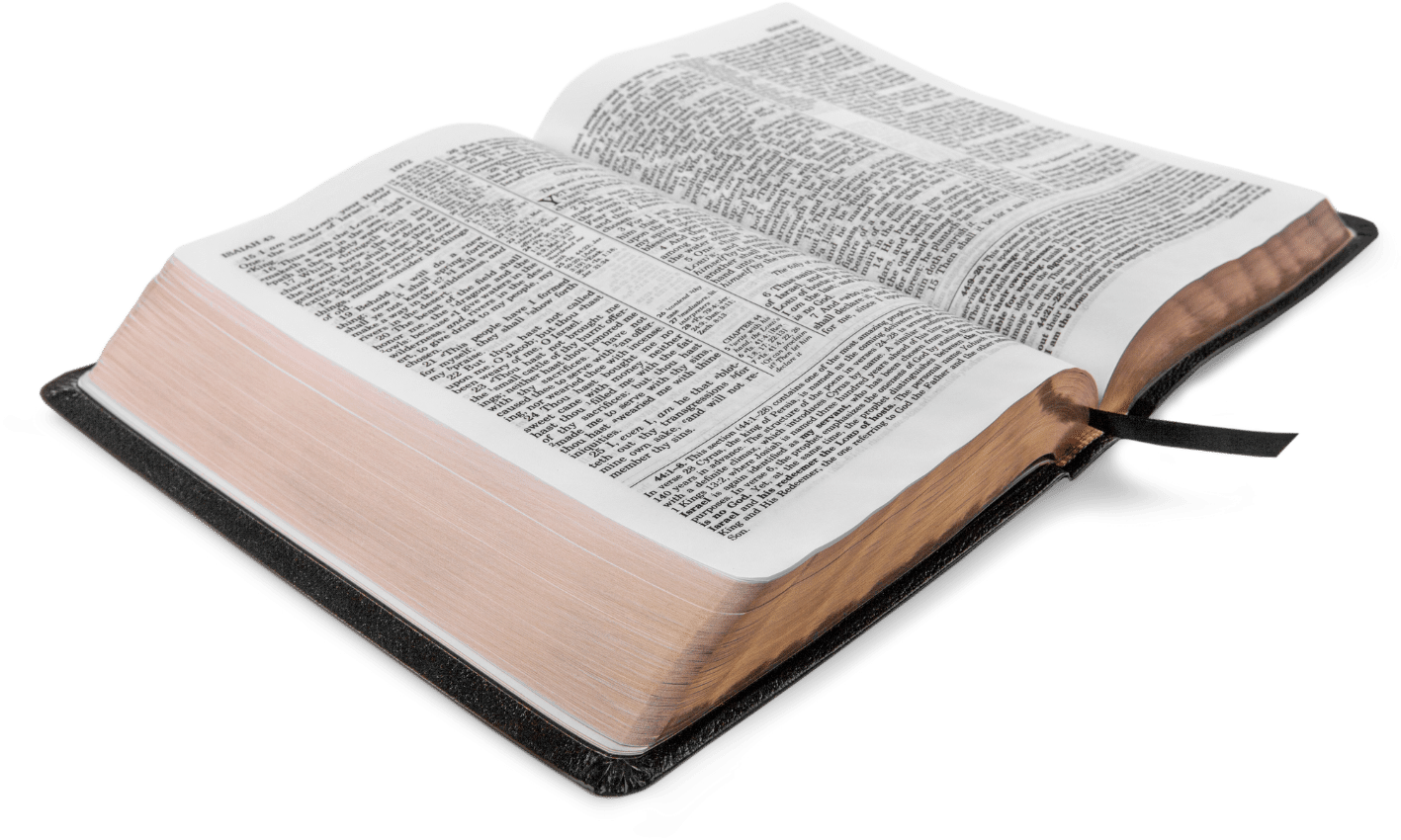
Think about that. What other book (not one book but 66 documents by 40 or so authors) could endure four decades of scrutiny and still be marveled and amazed in such a way? Not only that, but as I point out in my book Uninvented, there has been a veritable World War against the Bible to destroy its credibility for several hundred years.
It hasn’t worked. In fact, it hasn’t made a dent. It continues to transform lives and impart wisdom and salvation in every language as it has for the past 2,000 years. God, through Isaiah (51), tells us why:
10 As the rain and the snow
come down from heaven,
and do not return to it
without watering the earth
and making it bud and flourish,
so that it yields seed for the sower and bread for the eater,
11 so is my word that goes out from my mouth:
It will not return to me empty,
but will accomplish what I desire
and achieve the purpose for which I sent it.
God’s word is life itself! Jesus, who was himself the logos, the word of God, told us that word is our sustenance, that “Man shall not live on bread alone, but on every word that comes from the mouth of God.” We live on him in his word! I wonder how many of us treat God’s word inscripturated in our Bibles like we literally can’t live without it, without him. Sadly, I’m not sure I really grasped the truth of this for much of my Christian life, or maybe what it really meant. Maybe it’s just that we can only glimpse the truth of this in our fallen state, living in a fallen world among fallen people. Thankfully, that electrifying experience of God’s word I first experienced when I became a Christian was to strike me decades later in a deeper and more profound way.
I shared some of this in other places on the site, but it’s worth repeating here. While I’d always read the Bible daily after I’d crossed the Tiber all those years ago, into the fifth decade of my life I hadn’t read it from cover to cover in a long time. I was probably in my 20s when I’d last accomplished that. Sometime in 2012, I decided I was going to do two things that would have a profound impact on my life, and my relationship with God. I decided I was going to read the Bible every morning and get on my knees and pray. I believe the praying was the reason God’s word came alive to me in such a new and refreshing way. I started in Genesis 1 and made my way to the last verse in Revelation a couple years later. Although I’d been reading the Bible pretty much daily for over three decades by this point, went to church every Sunday all those years, and was a seminary graduate, this time through the redemptive history told in the Bible blew me away. It was almost like I’d never read it before. It was that amazing, that fresh, that invigorating.
I decided I was going to do it again, read it from cover to cover, but this time I was going to write my way through. There were so many times the previous two years as I was reading it, that I wanted to share the amazing insights I was getting from this inexhaustible resource of life with someone, anyone. Unfortunately, most mornings it was normally just me and my Bible. Next time through, I determined, I wasn’t going to let these thoughts disappear into the ether. So, I figured out how to get a free WordPress site with a minimalist theme and started writing at Genesis 1. Lacking creativity, I called it, My Walk Through the Bible. It is one of the greatest things I’ve ever done in my life. Having to grapple with the text and write down my thoughts forced me to really think through what I was writing about. I had to ask over and over, what does it really mean? In every book, and in every chapter, I found it meant far more than I could have ever imagined before. It was like diving into a bottomless ocean, thinking there’s got to be a bottom somewhere, but realizing it’s infinitely deep, just like our God, it’s author.
Biblical Hermeneutics
I can’t introduce you to my walk without a short lesson in how the Bible should be interpreted, or what is known as hermeneutics. That word means the study of the methodological principles of interpretation, or how we come to interpret what a text means. It applies to any text, but is especially important when applied to the Bible because eternity is on the line. The first years of my Christian life I read the Bible with out much if any historical or theological context. It was just me and God’s word, and I guess I thought he would kind of zap me so I could understand it. Needless to say, that is not the best way to discover the true meaning of what was written. We know Christians will never agree on one meaning for everything, but I learned we need to do the best we can to understand what’s in the text. So, as we come to the text of Scripture, we need to keep these four things in mind if we are to interpret it rightly:
- Authorial intent: what we can assess the author intended when he wrote the words.
- Audience understanding: what the intended audience would have been expected to believe the words meant. This means context counts, specifically the moment in history in which it was written.
- Scripture interprets Scripture: never read a text in isolation from the rest of Scripture.
- Scripture is all about Christ (Luke 24): the overarching theme of God’s revelation to us is Jesus.
To fully benefit from the scope of redemptive history revealed to us in Scripture, we must understand how the puzzle pieces fit into the overall big picture. The pieces can only give us a limited picture, and an easily distorted one. Fortunately, we’re not in this alone, which is why we must read more than just the Bible. We have easy access to books, and the Internet, to help us grow in our understanding of the big picture, and all the little pictures that make it up. If we are to obey the imperative of Scripture itself to grow in our knowledge, then we will want to take advantage of the great minds who have come before us, as well as those of our contemporaries. The treasures are endless.
I hope in some small way my efforts grappling with God’s word might help others know him better, and worship him for the great God and Savior he is.

Early Sun’s ‘Goldilocks’ Rotation Rate May Be Why We’re Here: Nope, it’s God!
I love secularists! They make the Christian apologist's job so easy. For the last few hundred years of Western civilization, intellectuals and cultural elites have painted...

The Wedding Supper of the Lamb, and My Daughter’s Wedding
We had the incredible privilege last weekend of enduring the traumatic experience of hosting our daughter's wedding. Until one actually does such a thing, you have no idea...

Mommy, Mommy! Watch Me!
Human nature is one of the most powerful apologetics for the veracity of the Christian faith. What else can explain so well the glory and mess that is humanity, but that man...
Now I lay me down to sleep . . . Teaching Death to our Children
I grew up as I think of it as a typical Catholic of the 60s and 70s. We attended Mass every Sunday, I went to Catechism, and did my first Communion and Confirmation....
You Can Use The Ontological Argument With Your Kids. . . . No Really
A favorite tactic of skeptics to justify their rejection of God is to take some example of what God has ostensibly done or does, and assert that if there was a God he...

Are You Saying There’s an Oak Tree in that Acorn?
Our family moved from Illinois (thank God!) to Florida in June of 2017. Talk about a contrast, one that doesn't have to be explained. We moved to the Tampa area, and the...