Secularism is the religion of the 21st century West, and all the most powerful messaging cultural machinery indoctrinates us into its view of reality. At the top of that list has to be our entertainment mediums, especially movies and television. Stories on screens are reality shapers, that is, they build into our imaginations ways of seeing and interpreting the world. Sociologically speaking, they are plausibility generating mechanisms in that they, without our knowing it, paint a picture of reality that we accept as real, or what seems real to us. Over time, if we take in entertainment uncritically, our plausibility structure (the building in our minds that determines how we see reality, the seemingness of it) becomes thoroughly secular, regardless of what we “believe.” (And for a short definition, what I mean by secular is that the material world, this world, is all that matters, and the here and the now is what is most important about life.) (more…)
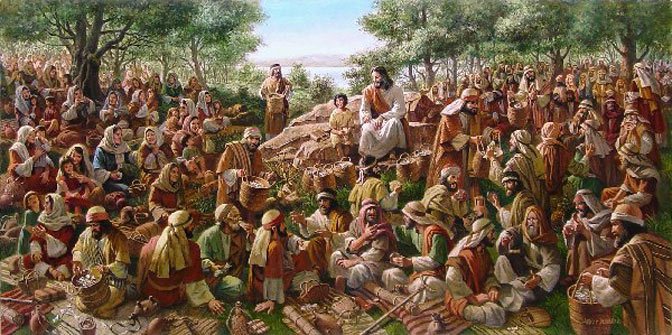
Critics and skeptics of the Bible think that the miracle stories in the gospels are what make them so hard to believe as history. Just the opposite is the truth. In fact, the way the stories are portrayed, and that they happened at all, are evidence for their veracity. The primary reason they are not believed is because of an anti-supernatural bias people bring to the text: Miracles can’t happen, ergo, the miracles in the Bible didn’t happen! Hogwash. The accounts we read in the gospels do not, at all, read like myths and legends, but like eyewitness testimony of events that actually happened. An important point to keep in mind as you are reading the text is the critics’ claim: What you read was made up, to one degree or another. The question we ask in return is, could or would it have been made up? Knowing human psychology as it is, I find this one of the most profound questions I can ask as I’m reading the Bible. My answer is always, no! (more…)
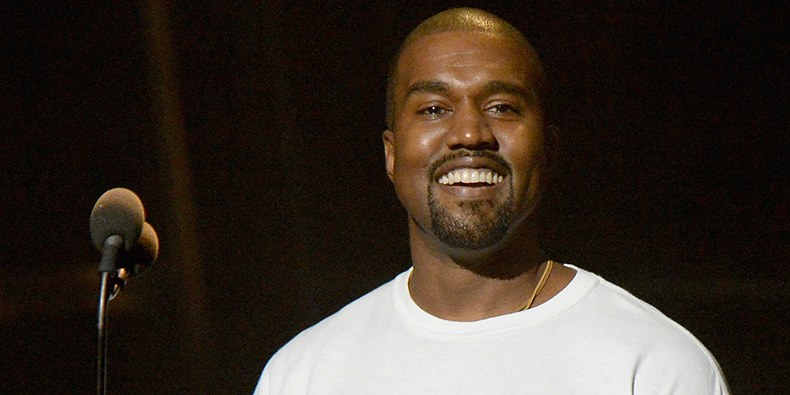
Most people are familiar with the name of Kanye West, even if they think it an infamous one. After all, he’s married to a Kardashian, and with that comes a cultural ubiquity of not the best sort, at least from a Christian perspective. Plus I’ve always thought of him as kind of strange, and an egomaniac to boot. Now he claims a conversion to Christianity, and in Kanye fashion isn’t keeping quiet about it. Much Internet ink is being spilled with a distinctly jaundiced eye toward the news, and I can certainly empathize with that. But given things seem to be going in the opposite direction culturally, with people advertising the abandonment of their faith, I thought, maybe I should give Kanye the benefit of the doubt.
My youngest, our 17 year-old son, came to me the other day and said I had to watch the beginning of this short video:
The mechanism that allows human beings to hear is insanely complex. Either we are incredibly lucky, or that mechanism was created by an all powerful, all creative, all intelligent divine being. Can something so intricate that works as perfectly as does human hearing not be designed? Luck is a terrible explanation, as is an unguided process of natural selection and random mutation (Darwinism). The design inference (e.g., looking at human hearing and inferring a designer), is something I’ve used innumerable times with my children as they’ve grown up. It’s the reason my son would see this and instantly make the comparison: chance versus design? Luck versus God? I’ve programmed (we need to do this) my kids to see such things biblically, so of course they see God as the only plausible explanation, and chance as ridiculous, even ludicrous (more on this below).
In my previous post I wrote that the historical novel, The Robe, was the greatest historical novel ever written. I haven’t read every one, so this may be a bit of hyperbole, but author Lloyd C. Douglas makes a compelling case about how the spread of the gospel message is evidence for its truth. I explained that biblical critics claim that the gospel stories are akin to the telephone game where the initial events are distorted over time to become what we read today in our Bibles. My contention, and what is so expertly conveyed in The Robe, is that this is not at all how the message and events recorded in the gospels spread. In fact, distortion as critics claim was not possible given the events, the culture, and the nature of life lived at the time. Here are some reasons why. (more…)




Recent Comments