Oct 21, 2017 | Theology

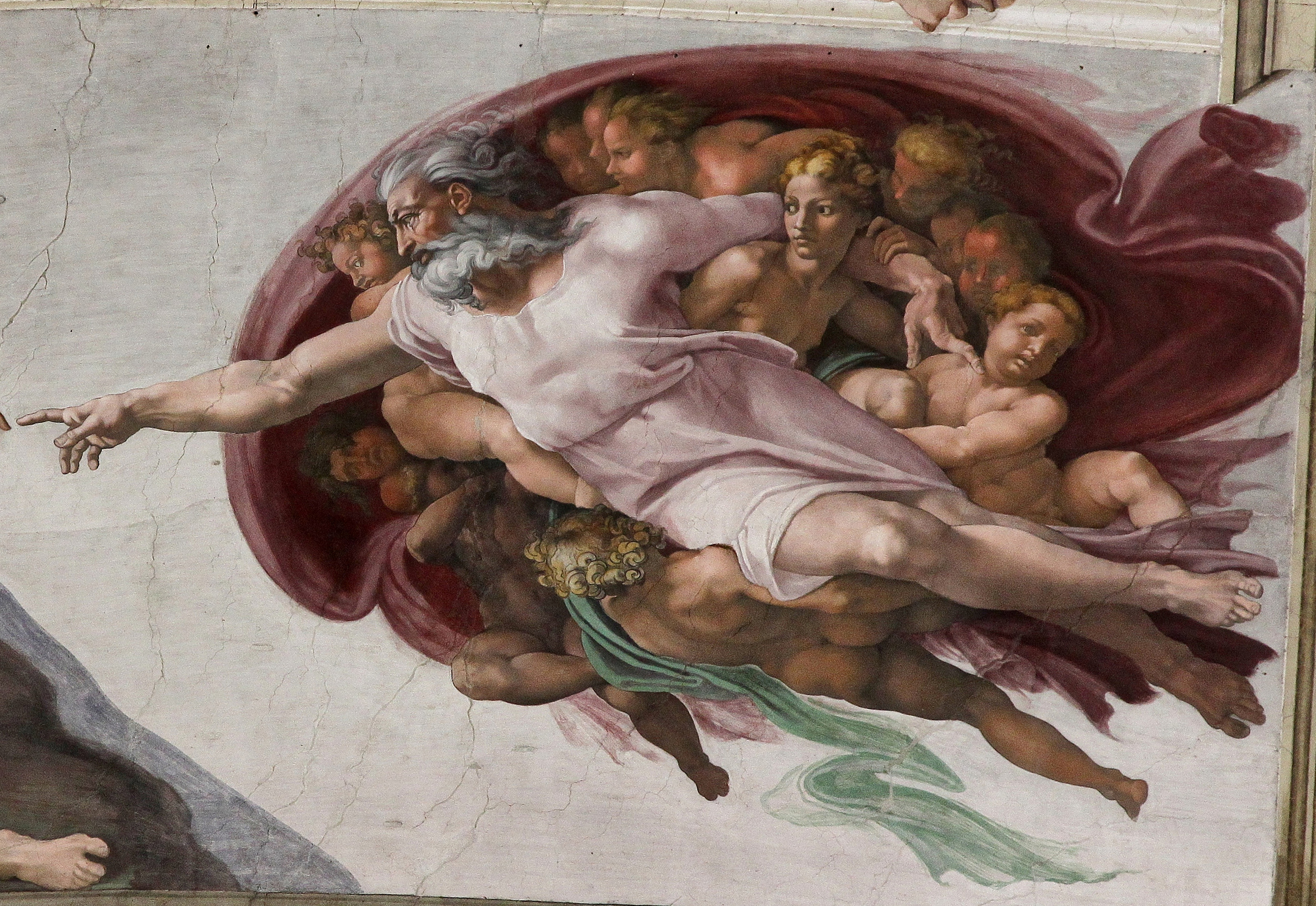
Some years back I decided for the first time in a very long time to read the Bible through cover to cover (I suggest you do that too!). I was sort of surprised, although I shouldn’t have been, by the centrality of the idea (or doctrine) of creation to the narrative of God’s dealing with his people. In fact, the history of redemption is meaningless apart from the centrality of the doctrine of creation to it. This is profound, and to borrow from the hippie party days of the 1970s, very heavy. I’m afraid I can’t do it justice in a short blog post, but I’m gonna try.
These thoughts were impressed anew upon me when I read a piece titled, “What We Forget about Creation: How Augustine Expands Our Vision.” The author, Gavin Ortlund, points out something so glaringly obvious that everyone seems to miss it: that many think the early chapters of Genesis “are important . . . primarily to set the stage for the real business of Christian theology—those issues involved in the doctrine of redemption.” Boy oh boy, does that nail it. The only real interest in the creation accounts seems to be fodder for the debate with Darwinists. How utterly wrong-headed that is cannot be stated strongly enough. The first sentence of this paragraph from Ortlund almost comes off as funny, if it wasn’t so sad:
In the church we have often emphasized life as a Christian without reference to life as a human being. But the categories of sin and salvation are only comprehensible in light of the prior category of creation—the assertion, “I am a sinner” is a further specification of the assertion, “I am a creature.” Furthermore, if redemption involves not a repudiation of our original creaturely mandate but rather a reorientation toward it (e.g., Col. 3:10, Eph. 4:24), then the doctrine of creation not only precedes and undergirds the doctrine of redemption, but informs it. We are not just saved from something (sin), but saved to something (imaging God).
(more…)

Oct 9, 2017 | Theology

Since the horrific events in Las Vegas many in the media have been obsessed with trying to figure out the motives of the psychopathic killer who killed close to 60 people in cold blood and injured about 500 more. More important to me, however, than what caused this evil mad man to do what he did, is the question of why evil exists at all.
Everyone knows that randomly killing and shooting hundreds of people is wrong, but WHY is it wrong? Why do we know the wrongness of it, that evil is, well, evil? There are very few possible answers. Here are three, and there really are not any more: (more…)

Oct 8, 2017 | Culture

When I was growing up in the 60s and 70s, the big concern and among fear-mongering apocalyptics was over-population. One best-seller at the time, published in 1968 by Stanford University Professor Paul Ehrlich, was subtly titled The Population Bomb. It predicted that there would be starvation on a mass scale by the 1980s because there would just be too many people. He starts his book this way:
The battle to feed all of humanity is over. In the 1970s and 1980s hundreds of millions of people will starve to death in spite of any crash programs embarked upon now. At this late date nothing can prevent a substantial increase in the world death rate . . .
Not only did Ehrlich’s hysterical predictions prove laughably false, in the 21st century demographers are telling us the exact opposite is the problem. Population decline is now the fear. All over the Western and much of the Asian world, women are not having enough children to replace current populations. Unlike the apocalyptic fear-mongers (yes, that in includes you, Al Gore) who see human beings as leaches on society and the natural world, demographers understand that human beings are a net resource; fewer human beings, fewer resources. More human beings, more resources.
(more…)

Oct 4, 2017 | Explanatory Power

In my previous post I argued that secular Western culture often makes belief in God problematic. For those who go with the secular cultural flow, instead of continually challenging and fighting it, God can seem less than real, less plausible. This has nothing to do with reason or logic or evidence, but with only what seems real. As I argued, for many people God seems no more real than Santa Clause. Whether he is or not isn’t the point, only the seeming of him.
This is a huge problem for the 21st century church, but invisible as a topic of concern. Most Christians are taught what they believe at church, but rarely why they believe it. Without the why, however, the what has much less staying power in the current secular cultural context. I have a very simple solution to this secular plausibility challenge. It’s called explanatory power.
(more…)

Sep 30, 2017 | Culture

Although only 3% of Americans claim to be atheists according to a recent survey, belief in God can be problematic in a culture awash in secularism. In our media, education, and entertainment God is persona non grata. Here are three examples:
- It’s amazing how many movies or TV shows you’ll watch, seeing people deal with the deep and profound issues of all kinds, and God is totally absent. If he, or Jesus, is mentioned at all it’s in the passing form of a curse.
- In media and journalism of all kinds, unless it’s specifically Christian, it’s the same. God is an idol curiosity, or something deeply personal that has no place in the public square.
- In public education, both in the K-12 and higher variety, God is separated from the classroom for the most part by that wall made famous by Thomas Jefferson, and completely distorted by the United States Supreme Court.
Culture is almost an all-powerful plausibility maker. In other words, it has the power to make things seem real or not to us. Whether the thing is real or not isn’t the point; the seemingness is. So for many Americans because of our dominant secular culture, God sometimes bears a passing resemblance to Santa Clause; he seems no more real than jolly ol’ Saint Nick. Culture obviously communicates, but culture also cultivates, and if we’re not careful we’ll allow the culture to determine our reality, or what seems real to us.
I myself went through a period of what I call “plausibility insanity” not too many years ago. I could never not believe in God or Christianity because I am convinced on too many levels that it is The Truth, but I had a little problem with it’s plausibility. I even remember thinking how I could understand why atheists see this religion thing as so strange. A few years before I decided to write Keeping Your Kids Christian, I wrote these words in an exercise I had to do for our church:
When I first became a Christian my faith was so dynamic and fresh and exciting. After 10 years or so it seemed like any relationship goes after a period of time, not as intimate and real. I continued to go to church as our family grew, read the Bible and prayed here and there, but it was nothing like those early days. I suppose every relationship can’t be always be novel and exciting, where it moves into a type of maturity that requires love that takes a decision and commitment. God doesn’t always seem “real,” but I can’t help but believe in a living God who is actually there.
Not even realizing it I was using the concept of plausibility. I didn’t understand how powerful a plausibility generator is the secular culture we live in. Even someone as convinced as I was about the veracity of Christianity’s truth claims, couldn’t help but be effected by the culture. It wasn’t any new arguments that I’d come across that made God seem less real to me; it was the culture! Unfortunately we live, eat, and breath this culture, and it will have its effect on us. So whenever we go through our own bouts of plausibility insanity I suggest we make use of the secular culture’s greatest enemy for the Christian: explanatory power. I’ll explain this “secret” to having your own personal powerful plausibility structure for your faith in my next post, so stay tuned . . . .



Recent Comments