This coming All Saints Day (otherwise known in America as Halloween) Protestant Christians celebrate the 500th anniversary of the Reformation. On October 31, 1517 Martin Luther nailed his 95 Thesis to the church door at Wittenberg, and the Western world would never be the same again. Luther discovered that a salvation apart from the works of the law was available by faith in Christ alone. He discovered this truth in his study of Romans. In chapter 3 Paul says:
21 But now apart from the law the righteousness of God has been made known, to which the Law and the Prophets testify.22 This righteousness is given through faith in Jesus Christ to all who believe.
I was reminded of the power of this “alien righteousness” recently as I was listening to a talk given by Michael Reeves as he was describing the “joyful exchange,” our sin for Christ’s righteousness. I believe many Christians live out their faith daily without having ever having heard of or experienced the wonder of this exchange.
One of my great frustrations in our secular age is how the concepts of “faith” and “belief” are communicated and understood. Too many Christians unknowingly acquiesce in using these terms that bias the cultural conversation against Christianity. What do I mean?
An article at The Veritas Forum is a great example. The title tells the tale: “The Dilemma of Faith in a Secular Age.” What does this assume? That “faith” and secularism are two separate concepts and have nothing to do with one another. The writer of the piece, unfortunately, accepts the dichotomy of “faith” and secularism as if they had nothing to do with one another—they do. She gives only one indication that all people struggle with what they believe when she says that “believers and non-believers alike struggle with doubt about whether our beliefs are indeed the right ones.” But using the terms “believers” and “non-believers” assumes that some people believe and others don’t, which plays into secularist hands.
The author writes about a poet who “has frequently written about this sense of being caught between belief and unbelief.” Again, the assumption is that such a thing “unbelief” exists—it doesn’t. In fact, every human being, regardless of whether they are “religious” or not, is fundamentally religious, i.e., they live by faith. It is crucial that we as Christians, and Christian parents, realize this.
Our secular Western culture tries to convince us that only “religious” people need faith—this is simply not true. At the level of presuppositions, all human beings are equal. Everyone has limited knowledge, therefore everyone lives by faith to one degree or another. The question is, which “faith” makes the most sense of reality as we find it, and which has the best evidence to make a claim on our allegiance. These questions must be at the forefront of raising kids in the 21st century West.
Thus the “the secular objectivity double standard.” The culture teaches in ways large and small, overtly and covertly, that those who are “believers,” i.e., religious folk, need “faith” and thus can’t be objective about things. Those who are “non-believers” it is assumed don’t need “faith,” and thus can be objective about things. To put it in technical terms, that’s a bunch of hooey!
The question on a level cultural playing field isn’t who has faith and who doesn’t, but who has the best justification for the faith that they have. Christians so easily buy into the notion that we’re the ones who must defend our beliefs, while the atheist, agnostic, or apathetic (the “triple A’s”) don’t have anything to defend—they do. As I’ve taught my children, if you learn how to skillfully ask questions, you’ll find that most of the triple A’s have no idea why they believe what they believe, or even what they believe. You’ll find that they can’t reason themselves out of a box, and yet they demand faultless evidence and logic from Christians, and when we provide it, they deny what it plainly says.
The implication of this double standard is that it allows people to move from one faith, Christianity, to another, all the while deluding themselves that they are moving from religion to non-religion. Technically they may not be “religious” in that they don’t go to church, but they still have a worldview based on faith commitments. The young lady, Lindsay, who inspired me to write the book is a great example. Leaving Christianity for agnosticism doesn’t means she left religion, or “faith” for some view of reality that doesn’t require faith. Every view of reality requires faith.
Death is ugly. Jesus himself agreed, as we can surmise from his response to the death of his friend Lazarus. Standing before the tomb where his dead friend had been buried four days Scripture says, “Jesus wept.” Why in the world would Jesus cry when in moments he was going to raise Lazarus from the dead? Because he saw, powerfully, what he created as good (Col. 1:15-17) experiencing the horrific effects of the Fall: Death. Paul says that “the wages of sin is death,” and the Lord God says to Adam in the Garden of Eden (Eve had not yet been created) that if he ate of the tree of the knowledge of good and evil he would surely die. This is why we cry. Death is . . . . wrong!
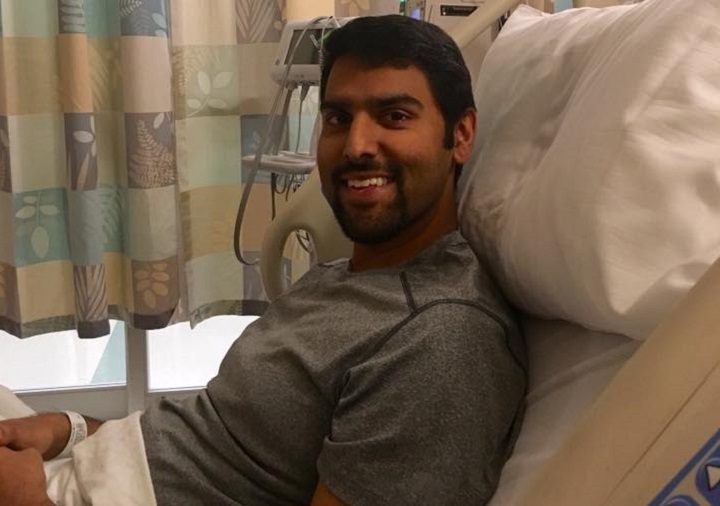
I felt emotions of despair this morning when I learned that Nabeel Qureshi, all of 34 years old, had finally had succumbed to the cancer that had begun to ravage his body a bit over a year ago. Part of the reason the death of this stranger effected me is because I’ve been praying for him since I learned of his diagnosis. Yet he experienced all too soon the wages of sin that we will all experience one day. There is nothing in life so as inevitable as death, and something we need to reflect on more.
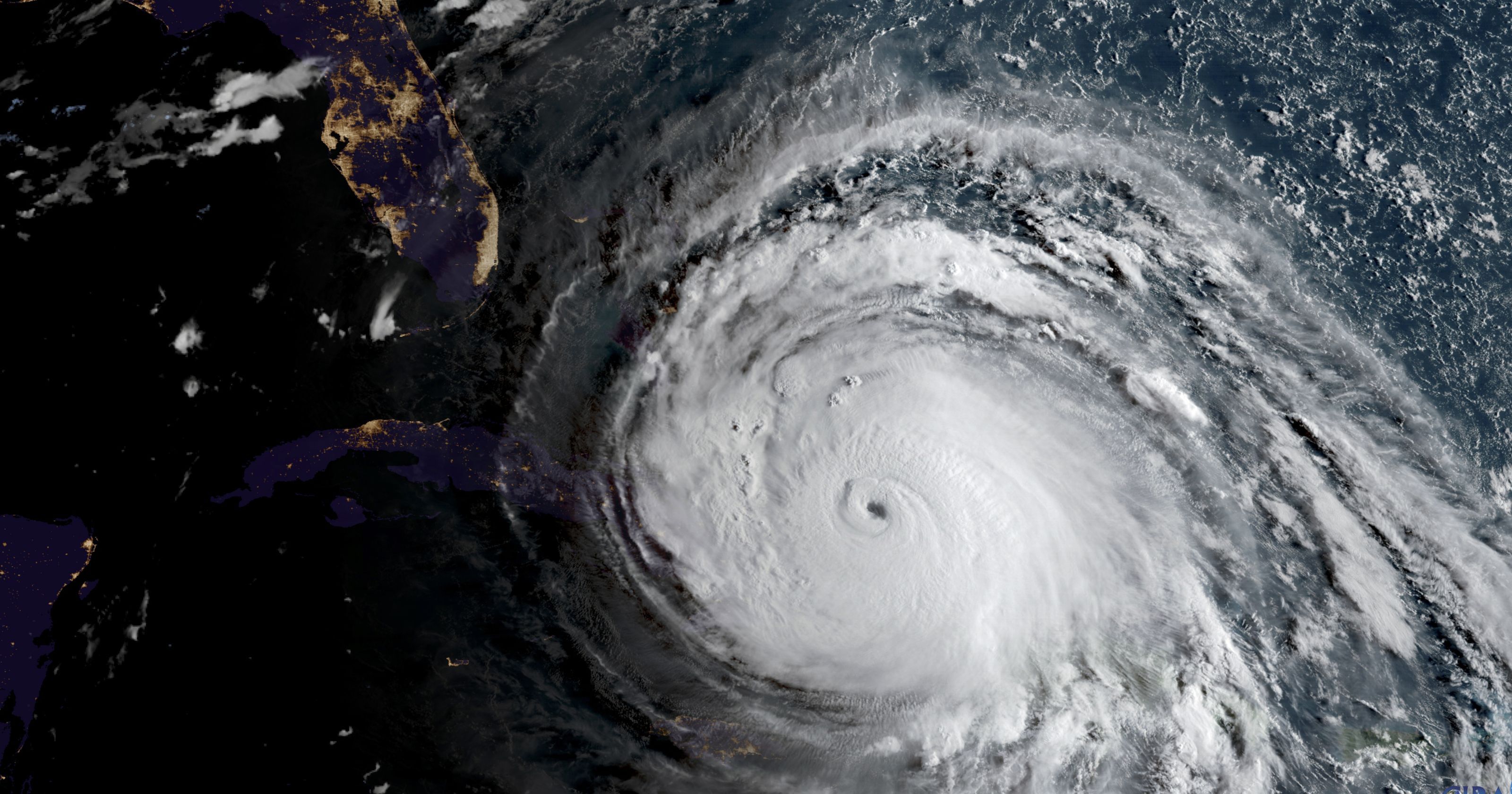
Having moved to Florida a few months ago, I wasn’t exactly expecting to experience a hurricane so soon, especially given that where we moved (the Tampa area) hasn’t had a direct hit since 1921. I guess we’re just good luck! Of course I don’t believe in luck, but in the sovereign, providential hand of Almighty God. But we didn’t get to experience the hurricane because we chickened out and left the state to environs well north to stay with family for a few days.
The word gratitude is a strange one to associate a “natural” disaster, unless the disaster was somehow escaped. I put the word natural in quotes because the basic assumption of people who live in the 21st century secular West is that the universe, and nature, is a closed system. In other words, even if they admit a God into the picture, he/she/it is a God similar to what Enlightenment Deists believed about God. He was to them an all-powerful Creator who built the machine, got it up and running, and let it do it’s thing based on “natural” laws. Orthodox, Bible-believing Christians know of no such God.
I signed the Nashville Statement because I stand with Biblical orthodoxy, which is inseparable from God’s creation mandate and definition of gendered personhood found in Genesis 1:27: “So God created man in his own image, in the image of God he created him, male and female, he created them”. The soul is God’s fingerprint on humanity, but the gendered body—essentially and ontologically male or female—will also, for the believer in Jesus Christ, be glorified and resurrected in the New Jerusalem.
I signed the Nashville Statement because my conscience compels me so, because the promises of liberty on the world’s terms are false and deceptive, and because many who currently claim to have Christ’s forgiveness and salvation must be called to account for leading good people astray with false promises and filthy lies.
I signed the Nashville Statement because the wolves are prowling, and the lions are roaring, and because they are bold and proud of their heresy, and because you must be warned.
By God through the merit and power of Jesus Christ, here I stand.






Recent Comments