Aug 20, 2017 | Explanatory Power, Gratitude

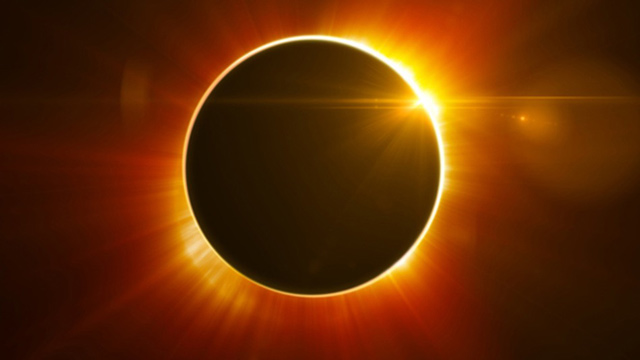
In case you’ve been in a cave somewhere without this Internet thing, or access to any TV, Radio, the regular or short wave kind, you likely know there is going to be a total solar eclipse tomorrow across much of America. This doesn’t happen very often so it’s kind of a big deal. It’s also awe inspiring for reasons that don’t need explanation, and that makes it a big deal too. I’ve seen several headlines in previous weeks similar to this one in the Washington Post: “The first solar eclipse to cross America in 99 years is coming. To some, it’s an act of God.”
Such a headline is indicative of the naturalism and its assumptions that pervade secular Western culture. Naturalism simply means that whether there is a God or not, the universe was set in motion, and natural laws are what keep it going, no God required. The Deism popular around the decades of America’s Founding was a form of naturalism. God’s a clock maker, he made the clock, and now it runs on its own.
(more…)

Jul 23, 2017 | Explanatory Power

When we came out of the movie theater having just watched the very intense and entertaining hit movie Dunkirk, all I could think of was the Apostle Paul’s phrase in Romans 6:23 that “the wages of sin is death.” This phrase about sin’s ultimate consequences points back to the Lord God telling Adam in Genesis 2 that he may eat from any tree in the garden, but that he cannot eat from the tree of the knowledge of good and evil, and that if he does he “will surely die.” We know that when Adam and Eve ate of the tree they did not instantly drop dead, so this death God spoke of was something more profound than just physical death. Yes, physical death entered the human race, but something much more sinister entered: sin, the cause of death, which is spiritual separation from man’s creator, God.
(more…)
Jul 20, 2017 | Explanatory Power
When I read a (long) piece recently titled, “Can We Be Good Without God? On the political meaning of Christianity,” I was reminded yet again that ideas have consequences, and that there is no neutral space where ideas inspired by “religion” do not have implications for life, including politics.
You may wonder why I put quotes around the word religion. I do that because all human beings are fundamentally “religious” in that every person lives by faith. For those uncritically marinated in secular Western culture, they actually believe that only “religious” people require “faith.” And I put faith in quotes because our secular culture defines “faith” as something only “religious” people need. How convenient, for the secularists: only those irrational religious people need faith. And they define faith, conveniently for themselves as believing despite inadequate or no evidence. Now that is doubly convenient!
(more…)
Jul 16, 2017 | Explanatory Power

My daughter recently went to a funeral for a teenage girl who tragically died from meningitis. Also, tragically from my perspective, her family is part of the Unitarian Universalist faith. As such, they don’t believe in a personal God, let alone anything to do with Christianity. The father of the dead girl read a eulogy from a physicist at the service, and it would be hard to find a better example of the power of sinful human self-delusion.
Remember what sin is, and is not. It is not primarily an outward action or inward thought measured against a moral code. What it is, is alienation from a holy God whose nature demands justice against sin. It’s not unlike a nation or state demanding obedience to its laws, and requiring punishment for infractions. Law breaking must be punished or civilization breaks down. Reality is fundamentally moral.
In our fallen state we, like Adam and Eve, do everything we can to hide from God. His wrath against sin must be appeased, and we want nothing to do with it. The nature of sin revealed to us in Genesis 3 is that we, buying into Satan’s temptation, want to “be like God.” We are by nature usurpers, as Paul says, God’s enemies. Elsewhere he declares, “The mind governed by the flesh is hostile to God; it does not submit to God’s law, nor can it do so.” If you think this is just a Paul thing read the Old Testament and you’ll see where he got his understanding of human nature.
What has all this to do with a eulogy and self-delusion? Let’s read the eulogy by a physicist named Aaron Freeman:
You want a physicist to speak at your funeral. You want the physicist to talk to your grieving family about the conservation of energy, so they will understand that your energy has not died. You want the physicist to remind your sobbing mother about the first law of thermodynamics; that no energy gets created in the universe, and none is destroyed. You want your mother to know that all your energy, every vibration, every Btu of heat, every wave of every particle that was her beloved child remains with her in this world. You want the physicist to tell your weeping father that amid energies of the cosmos, you gave as good as you got.
And at one point you’d hope that the physicist would step down from the pulpit and walk to your brokenhearted spouse there in the pew and tell him that all the photons that ever bounced off your face, all the particles whose paths were interrupted by your smile, by the touch of your hair, hundreds of trillions of particles, have raced off like children, their ways forever changed by you. And as your widow rocks in the arms of a loving family, may the physicist let her know that all the photons that bounced from you were gathered in the particle detectors that are her eyes, that those photons created within her constellations of electromagnetically charged neurons whose energy will go on forever.
And the physicist will remind the congregation of how much of all our energy is given off as heat. There may be a few fanning themselves with their programs as he says it. And he will tell them that the warmth that flowed through you in life is still here, still part of all that we are, even as we who mourn continue the heat of our own lives.
And you’ll want the physicist to explain to those who loved you that they need not have faith; indeed, they should not have faith. Let them know that they can measure, that scientists have measured precisely the conservation of energy and found it accurate, verifiable and consistent across space and time. You can hope your family will examine the evidence and satisfy themselves that the science is sound and that they’ll be comforted to know your energy’s still around. According to the law of the conservation of energy, not a bit of you is gone; you’re just less orderly. Amen.
This is one of the saddest things I’ve ever read. How comforting it must be to grieving parents to know their dead child is energy, particles, and photons. That although their child’s particles are “just less orderly,” they are still around.
I could go in many different ways with this “eulogy,” but notice one thing that speaks to the delusion of my title. Mr. Freeman asserts that the parents if they rely on physics don’t need “faith.” The absurdity of such a statement is almost inconceivable, if not for the power of spiritual blindness that envelopes the fallen, sinful human heart. Sinful man would rather do anything, including go to the heights of logical absurdity, than submit to his Creator. All human beings live by faith, even physicists (I spend a good number of words proving this in my book). The assumption behind the assertion (and all assertions are informed by assumptions) is that just because we can empirically prove that photons and particles and energy exist, one doesn’t need faith. To not put too fine a point on it, that’s balderdash!
One other thing stood out when my daughter first read this to me. Mr. Freeman seems to think that personhood is irrelevant. That we are persons isn’t the important thing about existence; the concept of personhood isn’t what gives life and lives their value. No, what gives life it’s value, he implies, is that we are energy, particles, and photons. I say to my wife all the time, I love your energy, particles, and photons! We all know, intuitively, that we are more than the sum of our physical parts. We are persons living in a world filled with persons! And we are persons precisely because we are made in God’s image and derive our personhood from him.
Jul 14, 2017 | Explanatory Power, Notable Quotations

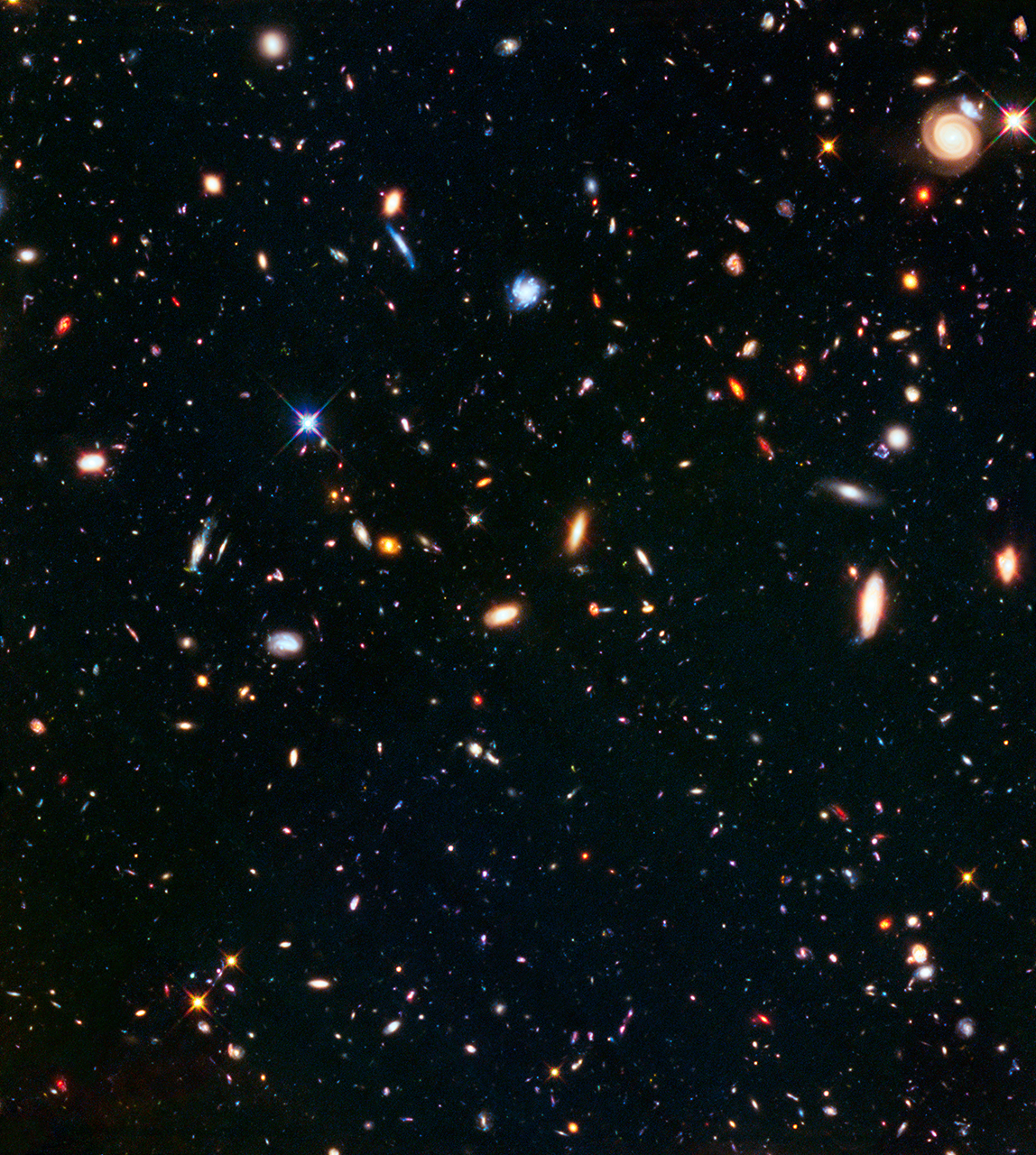
In an inversion of the ancient dictum, we might say: “As below, so above.” What we experience of space “out there” will reflect our inner spiritual state. Perhaps this is why, as glorious as the modern discoveries of the heavens are, they often leave us cold. This is not only because they’re mediated to us through images, or because we sense ourselves to be “of the earth.” It’s also because we children of modernity live in the shadow of the world’s disenchantment. The world is no longer “deep.” There is no inherent mystery in things. God’s absence from the world is echoed in the cosmos’s deafening silence. However wondrous the things we discover in space (which can awaken a reverent awe in even the most coldly scientific mind), they can never, in themselves, overcome this spiritual lack. For though we now have even more reasons for marveling at the cosmos than our ancestors, Peter Kreeft’s insightful observation remains true: People formerly looked upward and saw “the heavens”; today they simply call it “space.” Even the greatest exploratory adventures can never make up for this primary lack of spiritual vision.
—Brandon Tucker, “Creatures in the Cosmos”
I don’t normally comment on quotations, but this one is just too perfect, as is the entire article from which it comes. It is an especially good example of the concept of explanatory power. According to Google, explanatory power is “the ability of a hypothesis or theory to effectively explain the subject matter it pertains to.” In apologetics, it shows us how much more powerful and plausible the Christian worldview is compared to any of its competitors, and in this case the explanatory poverty of atheistic materialism. One of the keys to keeping our kids Christian is to consistently show them, to persuade and sell them on, the veracity and plausibility of the Christian Faith and worldview. As this article indicates, it’s rather easy to do.
Apr 5, 2017 | Explanatory Power

I recently finished reading a book called The Genesis of Science: How the Christian Middle Ages Launched the Scientific Revolution by James Hannam. The title appealed to me when I first heard of the book because of a fiction that has been promulgated since the mid-1800s of a war between religion and science. Nothing could be further from the truth. All the great strides of early science were made by Christians because they wanted to glorify their Creator by discovering how a universe created for us worked.
While some science was done by ancient Greeks, and Muslims and Chinese of the Middle Ages, it was in the Christian West where science as a continually expanding discipline was established. How ironic, then, that science has been used by secularists for the last 150 years as a battering ram against Christians. How even more ironic that we can thank Jesus of Nazareth for all the blessings of modern science and technology! Of course Christians know this, and do thank him for these blessings all the time, but just in an historical sense, without Jesus we’d still likely be stuck in some kind of “dark ages.”
(more…)



Recent Comments