
Feb 12, 2017 | Explanatory Power

In my last post I discussed how evolution as an unguided, impersonal, and material process cannot do what evolutionists claim it can do; it cannot create anything. A much better explanation, infinitely so in my estimation, is an omniscient, omnipotent, wildly creative supreme being. Specifically the life giving Triune God (Father, Son, and Holy Spirit) of Scripture. It shouldn’t surprise us that the first five words of God’s verbal, historical revelation to mankind are, “In the beginning God created . . . .” It should also not surprise us that evolution defined as a totally natural process, no God required, is the tip of the spear of Satan’s strategy to undermine belief and trust in Almighty God. God as Creator is foundational to every aspect of redemptive history. That’s why affirming it to our kids throughout their lives is also foundational to their own redemptive history.
(more…)
Feb 8, 2017 | Explanatory Power

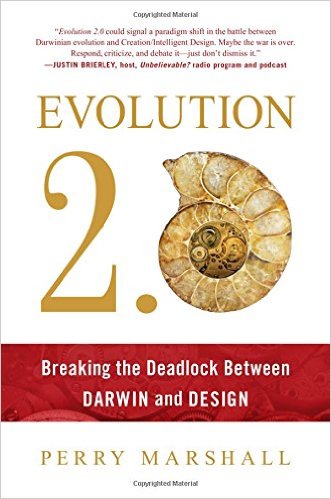
In a recent conversation with an agnostic, I was consistently amazed by this person’s insistence that intimate objects have “purpose.” He didn’t use the word, but that was what he described. The cell, he averred, does such and such, and creates this and so, all with a dexterity and design only a personal agent could impart, which of course he denied.
When evolutionists say that evolution can do or create certain things, they imply without the least proof that evolution is a creative force without the need for a Creator. It is self-evident, for them, that the universe is a closed system that runs on it’s own. But exactly how plausible is such an assertion (it obviously could never be proved)?
(more…)
Jan 12, 2017 | Explanatory Power

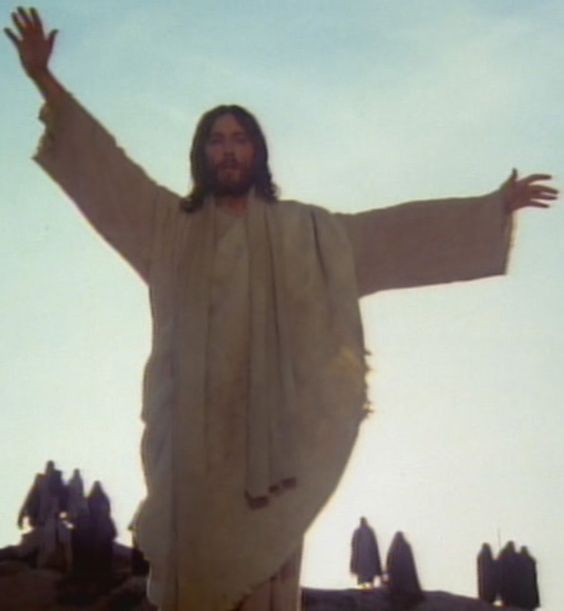
I wrote in previous posts about how human beings have a visceral revulsion toward death. We hate it. You might be surprised to learn that Jesus hated death too. How do we know? First, Jesus wasn’t exactly thrilled to have to be tortured and endure a Roman cross to secure the salvation of his people. In the garden of Gethsemane he prayed three times that God would take this cup of suffering from him, and from Luke 22, “being in anguish, he prayed more earnestly, and his sweat was like drops of blood falling to the ground.” Death was no picnic for Jesus. But in another scene, in the Gospel of John, when he confronts the death of another we observe his own visceral revulsion to the existence of death.
(more…)

Jan 6, 2017 | Explanatory Power

In my last post on the nature of plausibility structures, I used a movie with death as a central character to show how subtle messaging in movies leads to making God seem more or less real to people, thus more or less plausible. As I said, death never caused one of the other characters to ever bring up God, as if the divine being is irrelevant to life and death. I want to make the case briefly that although death and suffering often cause people to reject God, they are a far bigger problem for the materialist/atheist than the Christian. My contention is that death and suffering lends credibility to the Christian faith, while making atheism/materialism less credible.
(more…)

Jan 2, 2017 | Explanatory Power
 In her fiction, O’Connor deliberately tried to alter her readers’ perception, to get them to notice what she called the “distortions” of modern life and to look at the created world closely enough that they might perceive in its depths proof of a creator. For secular audiences, she saw little point in subtlety, famously explaining her grotesque style in this way: “To the hard of hearing you shout, and for the almost blind you draw large and startling figures.”
—Cassandra Nelson, “Seeing Is Believing: What Flannery O’Connor Meant by ‘Vision'”
Jan 1, 2017 | Explanatory Power

Liberal Christianity (J. Gresham Machen’s Christianity & Liberalism is an excellent study on the differences between liberal and conservative Christianity) got it’s start in America in the late 1800/early 1900s. It started with the 17th Century Enlightenment that made reason the ultimate arbiter of truth, which lead to German Higher Criticism’s study of the Bible as a merely human document. Without the supernatural, all that was left of Christianity was ethics, which became the sine qua non of liberal Christianity. When the welfare of human beings becomes the focus of Christianity, and not the glory of a Savior God in Christ, it eventually loses it’s power to captivate the human heart. That’s what happened to “The Evangelical Scion Who Stopped Believing.”
(more…)



Recent Comments