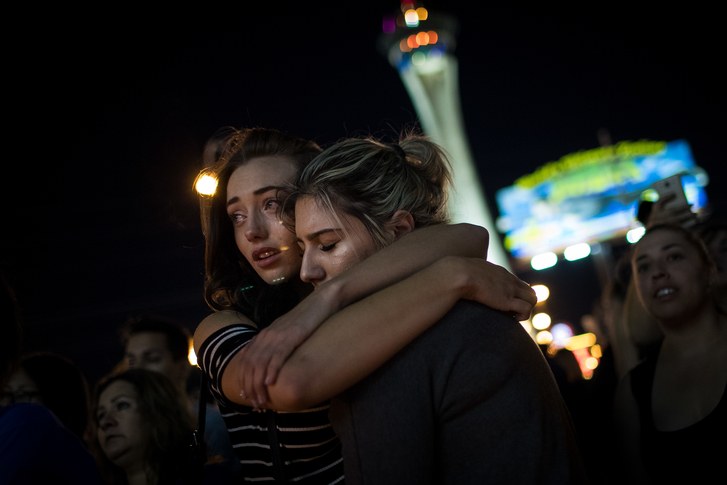
Since the horrific events in Las Vegas many in the media have been obsessed with trying to figure out the motives of the psychopathic killer who killed close to 60 people in cold blood and injured about 500 more. More important to me, however, than what caused this evil mad man to do what he did, is the question of why evil exists at all.
Everyone knows that randomly killing and shooting hundreds of people is wrong, but WHY is it wrong? Why do we know the wrongness of it, that evil is, well, evil? There are very few possible answers. Here are three, and there really are not any more: (more…)
This coming All Saints Day (otherwise known in America as Halloween) Protestant Christians celebrate the 500th anniversary of the Reformation. On October 31, 1517 Martin Luther nailed his 95 Thesis to the church door at Wittenberg, and the Western world would never be the same again. Luther discovered that a salvation apart from the works of the law was available by faith in Christ alone. He discovered this truth in his study of Romans. In chapter 3 Paul says:
21 But now apart from the law the righteousness of God has been made known, to which the Law and the Prophets testify.22 This righteousness is given through faith in Jesus Christ to all who believe.
I was reminded of the power of this “alien righteousness” recently as I was listening to a talk given by Michael Reeves as he was describing the “joyful exchange,” our sin for Christ’s righteousness. I believe many Christians live out their faith daily without having ever having heard of or experienced the wonder of this exchange.
In case you’re not familiar with the Burning Man Festival, it happens in the Nevada desert every year for nine days around Labor Day. And what a nine days it is.
I initially thought the title was a bit retrograde, a pre-feminist name for an event so post-modern that it goes full circle to become totally pagan. Look at the pictures and you’ll see what I mean: Woodstock on post-modern steroids. But shouldn’t it be called Burning Person Festival? My daughter quipped that maybe it is totally feminist after all because feminists want to burn men. I’ll confess, I hadn’t thought of that. But I think more is going on with the name, as I’ll conjecture below.
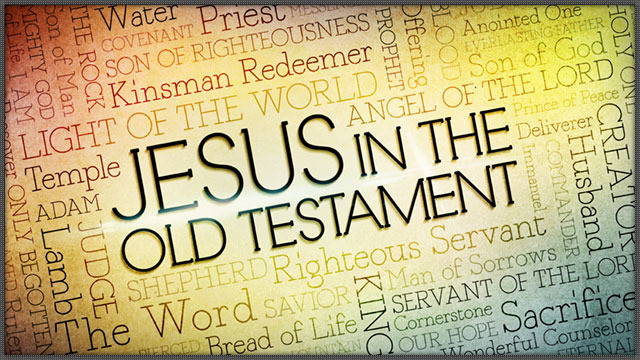
I recently saw this title to an article and it instantly got my attention. One of the great shortcomings of the modern Evangelical church is it’s lack of focus on the Old Testament. When I ask friends and family if they have read the Old Testament, all of it, I get hemming and hawing, and excuses. I’ll hear that it’s confusing, or hard to understand, or they imply it’s not really relevant to their faith. They are wrong on all counts. This points to a massive failure on the part of leaders in the Church. Commenting on a book about the dying Old Testament, the author of the piece confirms this:
[M]ost American Christians are relatively ignorant of basic truths about the Bible, particularly the Old Testament—and that trends in sermons and worship are contributing to the problem. For the most part, the Old Testament is ignored, and even when it isn’t, only a narrow selection of familiar texts are read, sung, or taught.
Why is this such a huge deal? Because without an understanding of the Old Testament we can’t understand Jesus! Our Lord himself rebuked his disciples after the resurrection with these words from Luke 24:
25 He said to them, “How foolish you are, and how slow to believe all that the prophets have spoken!26 Did not the Messiah have to suffer these things and then enter his glory?”27 And beginning with Moses and all the Prophets, he explained to them what was said in all the Scriptures concerning himself.
I bet those are two words you’ve likely never encountered in church before. What in the world do indicative and imperative have to do with Christianity? You won’t find the words in the Bible, but you will sure find what they represent, and if they get mixed up all kind of problems will creep into a Christian’s life. First let’s start with definitions, and we’ll do it in order because it matters very much which one comes first and which second in the Christian’s life.
Indicative: of, relating to, or constituting a verb form that represents the denoted act or state as an objective fact
Imperative: of, relating to, or constituting the grammatical mood that expresses the will to influence the behavior of another, expressive of a command, entreaty, or exhortation
In short, the indicative states something that has happened, e.g., Jesus died for our sins, and the imperative exhorts us to do something, e.g., be holy. In Christianity the former always comes before the latter because the fundamental fact of Christianity is the gospel, the good news that we are saved apart from obedience to the law. If we let the indicative come first, the law for us becomes like an unpleasant drill sergeant.
I guess this will be the last part of my little trilogy (previous two posts here and here) on the wages of sin, which Paul tells us is death. I made the claim that over the years my conviction of how we are saved has had a powerful impact on keeping our kids Christian. I previously explained the traditional Reformed tradition on soteriology (how we are saved), that we are actually spiritually dead in our sins, and that we unable to believe on the Lord Jesus until God does a supernatural work in our soul to raise us spiritually from the dead. This means that our salvation is not up to us, but to God. It is the unilateral work of our sovereign, Almighty God in Christ for us. He does not ask our permission. And thank God for that! Can you imagine if our salvation was ultimately up to us? As I argued in my last post, our sinful human nature compels us to run and hide from God, like Adam and Eve did, and the Scripture is clear that nobody seeks God.
Why is what I’ll call a God-centered perspective so powerfully persuasive to me, and to our kids? My impression of Christianity for the first six years of my faith journey was that the quality of my relationship with God was primarily dependent on what I did or didn’t do. In a positive thinking phase of my life I learned that, “If it’s to be, it’s up to me!” While certainly true in many areas of life, I’ve learned it most definitely is not true in my relationship to a holy God. Please note, though, the word “primarily.” The God-focused faith I was introduced into at 24 did not imply that what I did or didn’t do wasn’t important, or that my choices weren’t real. God’s sovereign work with human beings doesn’t destroy their nature, make of their freedom an illusion, or turn them into robots. What it does do, though, is put our confidence in the right place: him!







Recent Comments