
Feb 7, 2017 | Theology

If man had his way, the plan of redemption would be an endless and bloody conflict. In reality, salvation was bought not by Jesus’ fist, but by His nail-pierced hands; not by muscle but by love; not by vengeance but by forgiveness; not by force but by sacrifice. Jesus Christ our Lord surrendered in order that He might win; He destroyed His enemies by dying for them and conquered death by allowing death to conquer Him.
—A.W. Tozer, Preparing for Jesus’ Return: Daily Live the Blessed Hope
Jan 19, 2017 | Theology

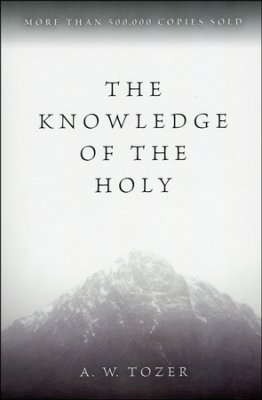
Almighty God, just because He is almighty, needs no support. The picture of a nervous, ingratiating God fawning over men to win their favor is not a pleasant one; yet if we look at the popular conception of God, that is precisely what we see.
Twentieth Century Christianity has put God on charity. So lofty is our opinion of ourselves that we find it quite easy, not to say enjoyable, to believe that we are necessary to God. But the truth is that God is not greater for our being, nor would He be less if we did not exist. That we do exist is altogether of God’s free determination, not by our desert nor by divine necessity.
—A.W. Tozer, The Knowledge of the Holy
Dec 20, 2016 | Theology

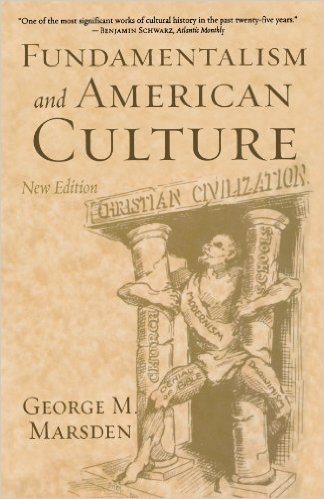
During the first half of the 20th Century, Mainline Protestant denominations were a large and powerful force in American culture. Protestant Christianity was mediated to America through these denominational bodies. This started to slowly change during what’s come to be called the fundamentalist/modernist controversies in the early part of the century (they peaked in the 1920s) when liberalism defeated the conservative fundamentalists for control of the denominations. From that moment these pillars of American Christianity began a slow slide into cultural irrelevance which persists to this day. These denominations continue to lose membership, and liberalism is why. The numbers are substantial:
Across the English-speaking world the numerical decline of mainline Protestantism is accelerating. The largest mainline Protestant denominations in the United States are the United Methodist Church, the Evangelical Lutheran Church in America, the Presbyterian Church (U.S.A.) and the Episcopal Church. Collectively, membership in these denominations decreases by about 1 million a year, resulting in hundreds of church closures annually.
A recent study attempts to answer the question why this is happening. I could have saved them the time. The answer is liberalism! In a study of “2,200 of the congregants, half attending growing churches and half at declining churches,” it became obvious: (more…)

Nov 30, 2016 | Theology

In my last post I wrote about the best way to ruin your kids faith is to make it all about them. It’s an extremely easy thing to let happen if you don’t actively take responsibility for the content and shape of your kids’ faith. We live in a culture where the subjective reigns in the form of the sovereign self, which is the reason the default religion of America, and especially our young people, is something called Moralistic Therapeutic Deism (MTD). The phrase was coined by sociologist Christian Smith in his 1995 book Soul Searching: The Religious and Spiritual Lives of American Teenagers. He describes MTD thus:
First, a God exists who created and orders the world and watches over human life on earth. Second, God wants people to be good, nice, and fair to each other, as taught in the Bible and by most world religions. Third, the central goal of life is to be happy and to feel good about oneself. Fourth, God does not need to be particularly involved in one’s life except when God is needed to resolve a problem. Fifth, good people go to heaven when they die.
(more…)

Nov 27, 2016 | Theology, Truth

Make it all about them!
Yes, I know this is a blog, and book, about keeping our kids Christian, but what we must warn them against is also important if we are to make that keeping more likely.
I recently learned about a Christian women. a famous “mommy blogger,” who was divorced, and recently announced she’s started dating a famous soccer star who happens to be a woman. Yes, this famous Christian author (New York Times Best Seller, no less), blogger, and speaker is now a confirmed lesbian. What makes this particularly especially problematic for conservative, orthodox Christians isn’t the so much the lesbian part of it, but the rationale she gives for engaging in a lesbian relationship. It makes her happy! Oh, so very, very happy! As she put it in her Facebook announcement about the relationship: (more…)

Nov 27, 2015 | Theology

When I saw the title of this piece by Jonathan Merritt who writes for the Religion News Service, I wasn’t sure how to take it. Was he implying that Jesus isn’t in the Psalms, and that Keller was reading that into the text. After reading the interview, I’m not sure what he thinks, and maybe that’s a good thing. But to question whether Jesus is in the Psalms even though his name isn’t used, obviously, is to ignore that Jesus himself said the Psalms, as well as the rest of the Old Testament did indeed speak of him. In fact, as I happen to be reading through the Psalms now, I am often reminded about the time Jesus spent with the disciples post-resurrection. The very first thing he did with two of them on the road to Emmaus was say this:
25 “How foolish you are, and how slow to believe all that the prophets have spoken! 26 Did not the Messiah have to suffer these things and then enter his glory?” 27 And beginning with Moses and all the Prophets, he explained to them what was said in all the Scriptures concerning himself.
In that same chapter after he’d appeared to the rest of the disciples and basically freaks them out, he takes a piece of fish, eats it and says:
This is what I told you while I was still with you: Everything must be fulfilled that is written about me in the Law of Moses, the Prophets and the Psalms.
Luke adds that “he” opened their minds so that “they could understand the Scriptures.” And it wasn’t just a time or two. Luke tells us in the first chapter of Acts:
3 After his suffering, he presented himself to them and gave many convincing proofs that he was alive. He appeared to them over a period of forty days and spoke about the kingdom of God.
So not only did he spend a lot of time teaching them how the Scriptures, our OT, all pointed to him, but proving to them that he was indeed alive, that he was in fact Jesus of Nazareth risen from the Dead! If you read through the Psalms you can’t miss our risen Lord in it. The whole of the Bible, from the first words of Genesis 1, to the very last words of Revelation, is about Christ. A short and readable book by Edmund Clowney is an excellent introduction to this critical concept not taught nearly enough in America’s Bible-believing churches: The Unfolding Mystery: Discovering Christ in the Old Testament.



Recent Comments